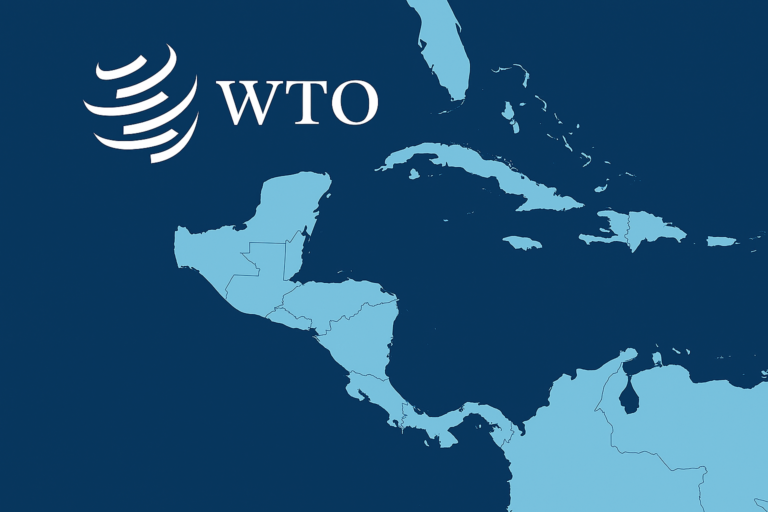
Lapping against the shores of several sovereign countries and dependent territories, the Caribbean Sea is our patrimony. Many of us learnt how to swim or were even baptized in its serene and azure waters. It sustains us economically through fisheries, shipping, tourism, and many other ways. This is why news of United States (US) military strikes on alleged drug smuggling boats in our stretch of ocean has sparked deep emotions: indignation, fear, and disbelief. In this SRC Trading Thoughts, I argue that the Caribbean Sea must remain a zone of peace for our shared prosperity and not a theatre of war.
Of Drugs and Geopolitics
Since September 2, 2025, the US Southern Command has carried out four strikes on alleged drug-smuggling boats in the southern Caribbean Sea near Venezuela. At least twenty-one people have been reportedly killed. Washington justifies the strikes as part of its fight against ‘narcoterrorism’, targeting a Venezuelan gang known as ‘Tren de Aragua’, which it had designated a foreign terrorist organization in February 2025. Washington also pointed to the need to stem the flow of illegal narcotics to the US from Venezuela, which it sees as a narco-state and the current administration as illegitimate.
For decades, Caribbean and Latin American countries have cooperated with the US on counter-narcotics under the banner of the latter’s ‘War on drugs’. The Caribbean region sits along a major transshipment route for narcotics moving from South America to satisfy markets in the north. Weapons flowing south from the US in turn help fuel our own gang violence and homicide rates in the Caribbean.
The US’ recent military strikes cannot be divorced from the wider deterioration in US-Venezuela relations, which soured under the late Venezuelan President Hugo Chávez Frias and worsened under his successor Nicolás Maduro Moros. Successive US administrations have imposed sanctions against Venezuela. Moreover, in 2020 the Manhattan US attorney announced charges against President Maduro and other high-ranking Venezuelan officials for narcoterrorism, inter alia, and offered an award for information leading to his arrest and/or conviction. In August 2025, the bounty was increased to US$50 million.
Against this backdrop, the deployment of some 4,000 US troops and other military assets in the Caribbean Sea near the Venezuelan coast has reignited speculation that the US intends to pursue regime change in Venezuela, an argument Caracas has also advanced. In response, the Maduro government has declared a state of emergency, and is strengthening its military assets. Colombia’s President Gustavo Petro has also condemned the US actions, noting that Colombian nationals may have been among the decedents in the last attack.
At Venezuela’s request, the UN Security Council met in emergency session on October 10, though any meaningful outcome remains unlikely due to the US’ veto power. Washington argues that it is at war with drug cartels and, therefore, is acting in self-defense under the UN Charter. Yet such claims are deeply questionable. A month after the first strike, no credible evidence has been presented by the US administration that the targeted vessels were indeed drug boats, nor have the identities or nationalities of the deceased been disclosed. Human Rights Watch and other observers have condemned these strikes as extrajudicial killings and violations of international law. Indeed, there are legitimate fears that the deceased could have been innocent migrants or fisherfolk.
These unilateral actions also recall a darker era of US interventionism in its so-called “backyard,” philosophically undergirded by the Monroe Doctrine, and exemplified by the US’s 1983 invasion of Grenada, the infamous Ship Rider agreements incident in the 1990s and the ongoing embargo against Cuba. For many Caribbean people, not only do these memories remain raw but the recent strikes mark a dangerous escalation of militarization in our usually peaceful waters, with possible economic and social implications.
Shared Waters, Shared Stakes
The Caribbean Sea, though less than one percent of the world’s ocean area, accounts for as much as 27 percent of the global ocean economy and around 18 percent of regional GDP, according to an Inter-American Development Bank (IDB) report. Every day, its waters carry fishing boats, cruise ships, tankers, and cargo vessels, serving as arteries that sustain regional life.
Despite our small landmasses, Caribbean nations command exclusive economic zones (EEZs) several times their size. This has led to a growing recognition that we are not merely “small island developing states” but “large ocean economies.” Many Caribbean countries are seeking to develop their blue economy through, for example, maritime transport, sustainable fisheries, renewable energy and deep sea mining. But investment and growth depend on stability. Escalating military tension between the US and Venezuela threatens this. Moreover, Trinidadian fishermen working the narrow waters between Trinidad and Venezuela have expressed fear for their livelihoods and safety. Therefore, increased militarisation or outright conflict or war could impact fisheries, deter investment and tourism, imperiling the very industries upon which our future prosperity depends.
A Zone of Peace Not War
Since the Cold War, the Caribbean has taken pride in being a “Zone of Peace.” This principle is based on a shared commitment to avoiding military conflict, conserving regional sovereignty and stability and rejecting foreign military intervention. At the 80th Session of the United Nations General Assembly (UNGA) in New York, several Caribbean and Latin American leaders reaffirmed this stance in their speeches.
However, troubling cracks are emerging in what should be a unified Caribbean Community (CARICOM) front on this issue. Citing the blood shed which drug trafficking has wrought on her own country, Trinidad and Tobago’s Prime Minister, Kamla Persad-Bissessar, publicly supported the US actions in the region after the first strike. Media reports also suggest that the US has approached Grenada to host radar equipment and associated personnel at Grenada’s main airport.
CARICOM must sustain open diplomatic engagement with the US on this issue, recognizing that the region has allies in the Caribbean diaspora, civil society and business community in both the region and internationally who do not want to see an escalation of this conflict. Over 60 civil society organisations in the US authored a letter dated October 8 to members of the US Congress expressing concern over the legality and morality of these strikes, while several senior Democrats have asked for evidence justifying the strikes. In a press release, the UN itself has called for restraint, with Assistant Secretary-General Miroslav Jenča emphasizing that all efforts to combat transnational organized crime must be conducted in accordance with international law.
We all share a stake in ensuring that the Caribbean Sea, the waters which sustain our livelihoods and economies, does not become a conflict zone. The Caribbean must speak with one voice to defend the sanctity of our shared patrimony. Preserving peace and prosperity in these waters is not just a diplomatic goal. It is a moral, social and economic necessity.
Alicia D. Nicholls is the junior research fellow of the Shridath Ramphal Centre for International Trade Law, Policy & Services of The UWI. Learn more about the SRC at www.shridathramphalcentre.com.