


5th Distinguished Owen S. Arthur Memorial Lecture
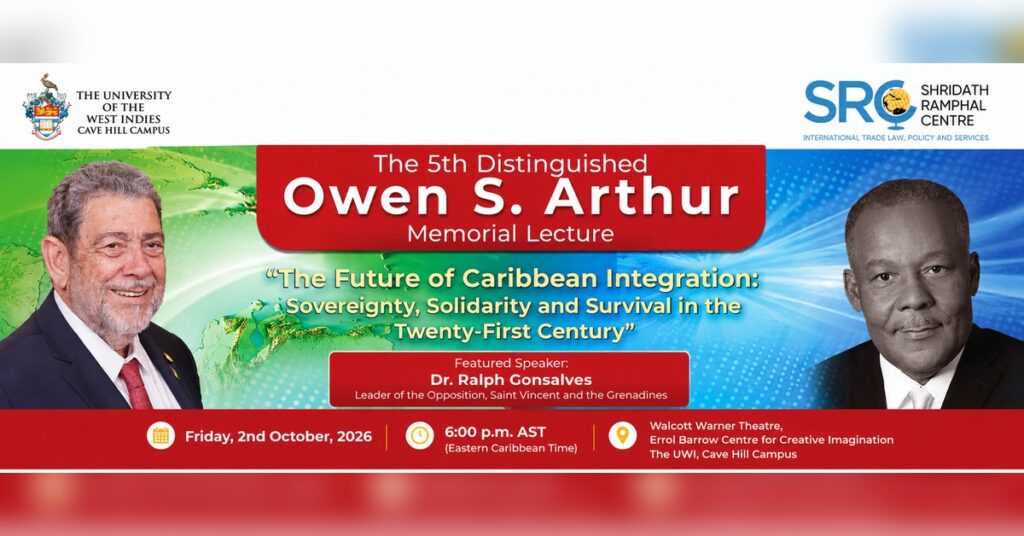
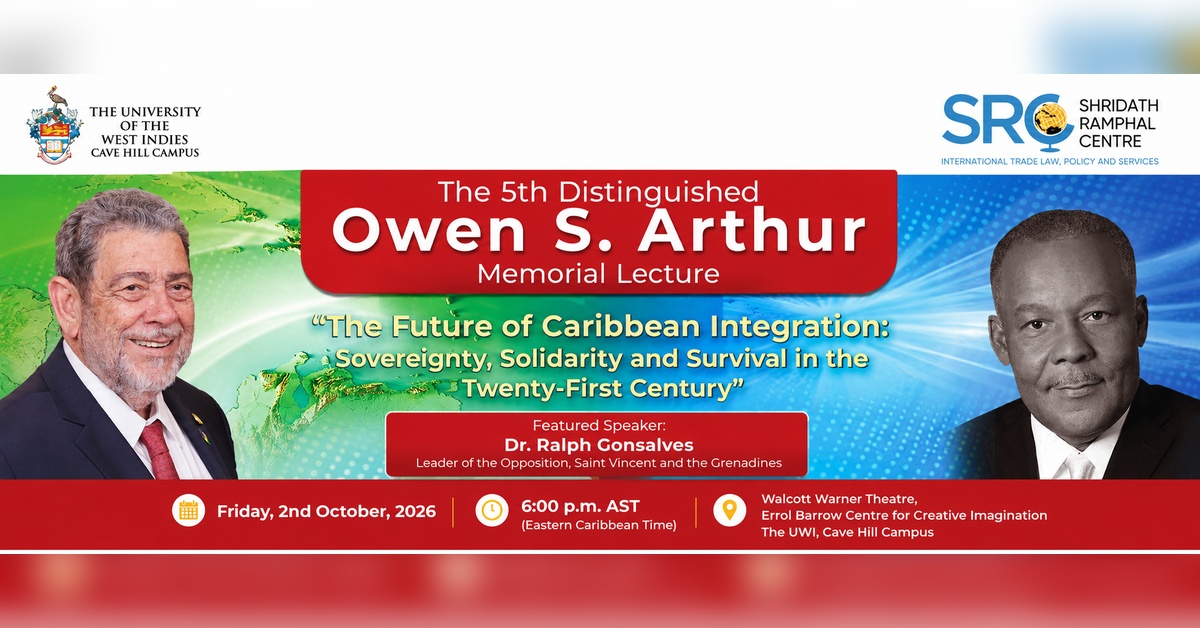
2026-10-02T18:00:00-0400@*2$*The Shridath Ramphal Centre (SRC) is pleased to announce the return of its Distinguished Owen S. Arthur Memorial Lecture series, with this year’s edition taking place on Friday, 2nd October 2026, at the Walcott Warner Theatre, Errol Barrow Centre for Creative Imagination, The UWI, Cave Hill Campus.
Shut Up & Write Sessions
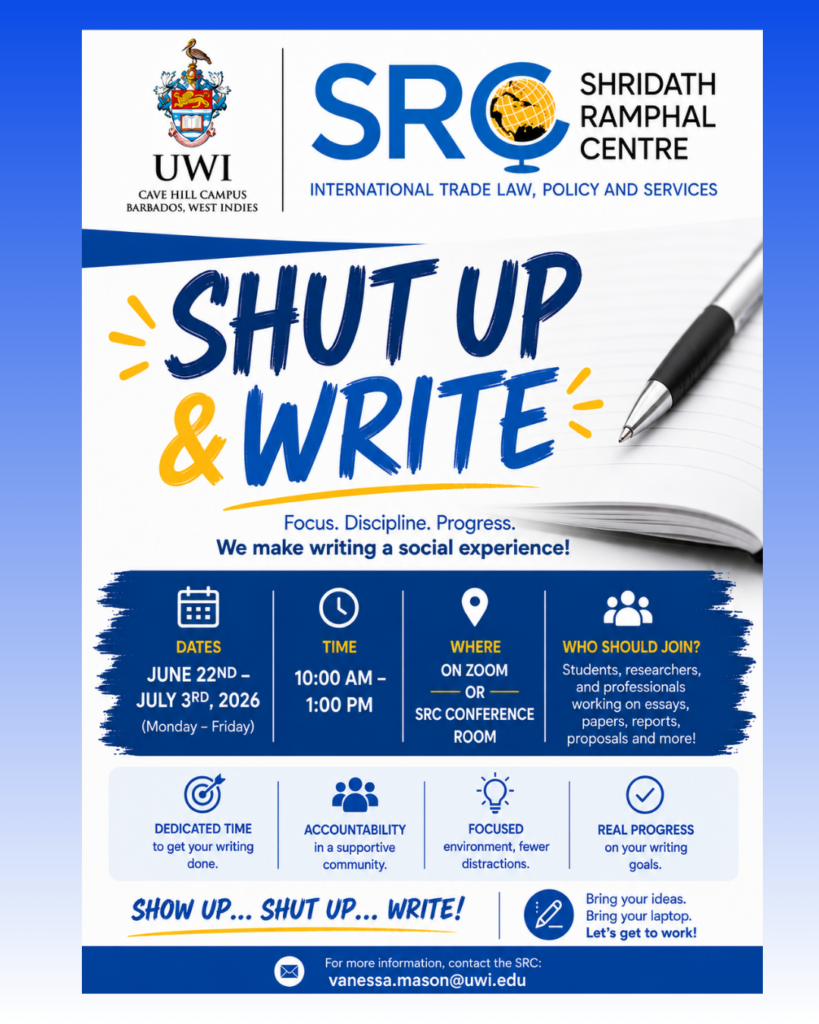
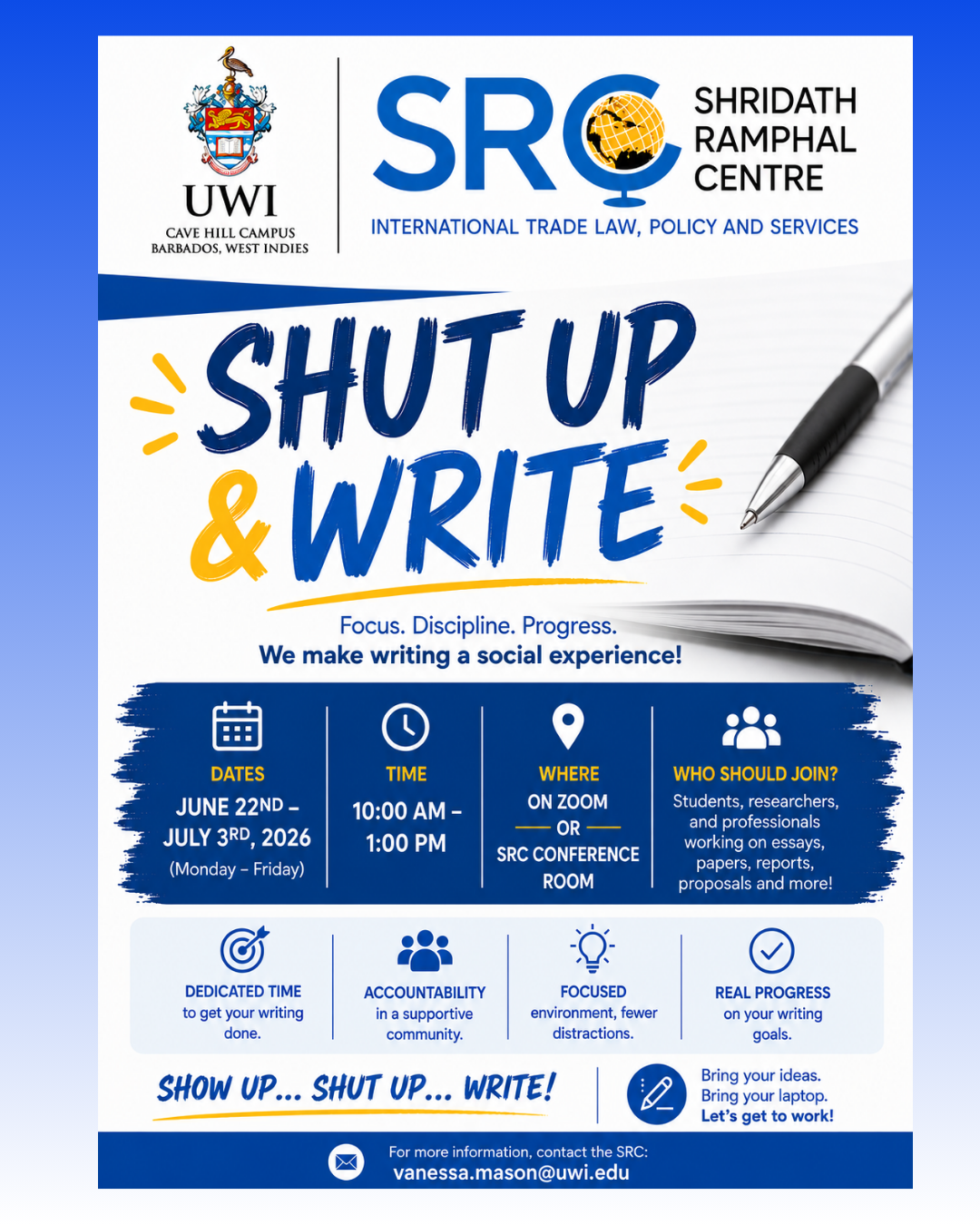
2026-06-22T10:00:00-0400@*744$*The Shridath Ramphal Centre (SRC) invites students, researchers, and professionals to join its Shut Up & Write initiative, a dedicated space to focus, write, and make meaningful progress on outstanding academic and professional work.
Running from June 22nd to July 23rd, 2026, sessions will be held every week from 10:00 AM to 1:00 PM and are available bothin-person and online via Zoom.
The Future of Trade & Enterprise: Perspectives from Youth-Led Small Businesses
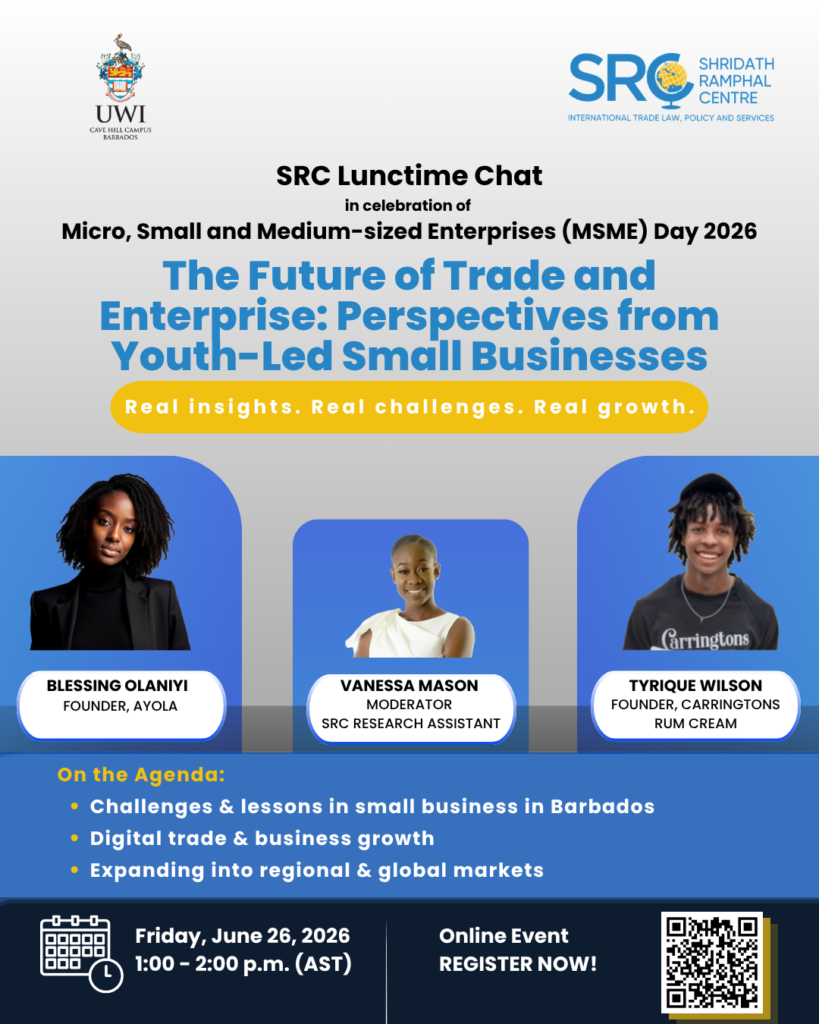
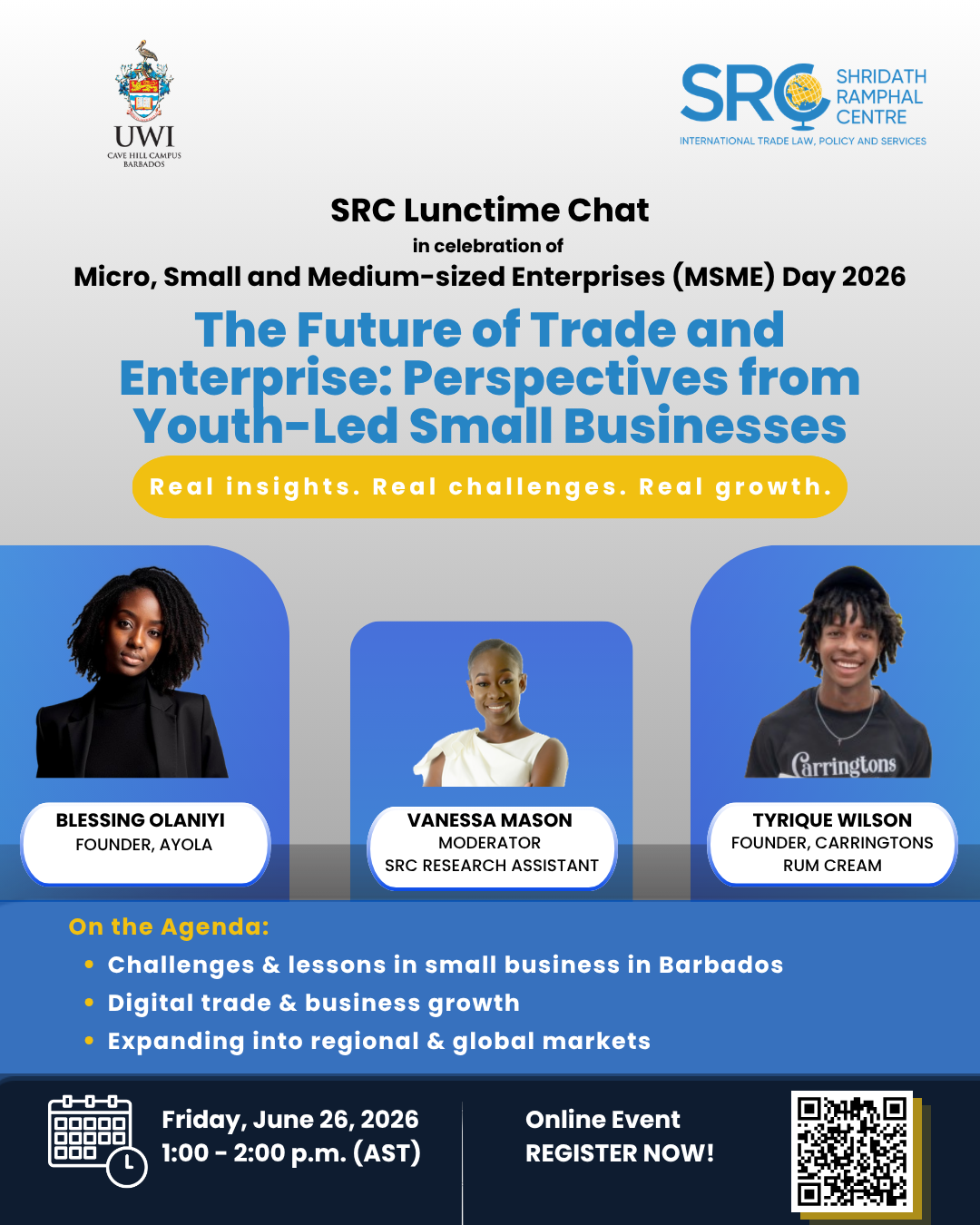
2026-06-26T13:00:00-0400@*1$*On Friday, June 26th, 2026, from 1:00 – 2:00 PM (AST), the Shridath Ramphal Centre will host its Lunchtime Chat via Zoom in celebration of MSME Day 2026, under the theme “The Future of Trade & Enterprise: Perspectives from Youth-Led Small Businesses”. The session will feature two trailblazing Caribbean youth entrepreneurs who will share candid insights on building and growing a business in today’s economy, covering challenges and lessons in small business, digital trade and business growth, and expanding into regional and global markets.
In an uncertain global trading order, is the WTO still relevant to the Caribbean?
Alicia Nicholls$*Failure. Broken. Flop. These are some of the descriptors commentators have used for the World Trade Organisation (WTO)’s fourteenth Ministerial Conference (MC 14) held in Yaounde, Cameroon, from March 26-30, 2026. Traditionally, this event would not be on the average citizen’s radar, but the tariff turmoil sparked by the United States’ so-called “reciprocal tariffs” and the oil price shocks from the conflict in Iran and resulting effects in the Strait of Hormuz have made trade impossible to ignore, and with it, renewed questions about whether the WTO still matters.
Small Cards, New Horizons: Barbados-Guyana Mutual Recognition of IDs

Vanessa Mason$*Once again, there is local concern in Barbados about a small step in fostering closer regional ties. Effective July 1, 2026, citizens of Barbados and Guyana will have two options to travel between their nations: by passport or by national identification (ID) card. Similar to the Enhanced Cooperation in Free Movement regime among four CARICOM states (Barbados, Belize, Dominica, St. Vincent and the Grenadines) that came into effect on October 1, 2025, the announcement has already stirred security, administrative and legal concerns. The concern is understandable and stems largely from a lack of information; that failure lies squarely with those responsible for communicating these changes.
After MC14: The Caribbean in a Shifting Global Trading Order
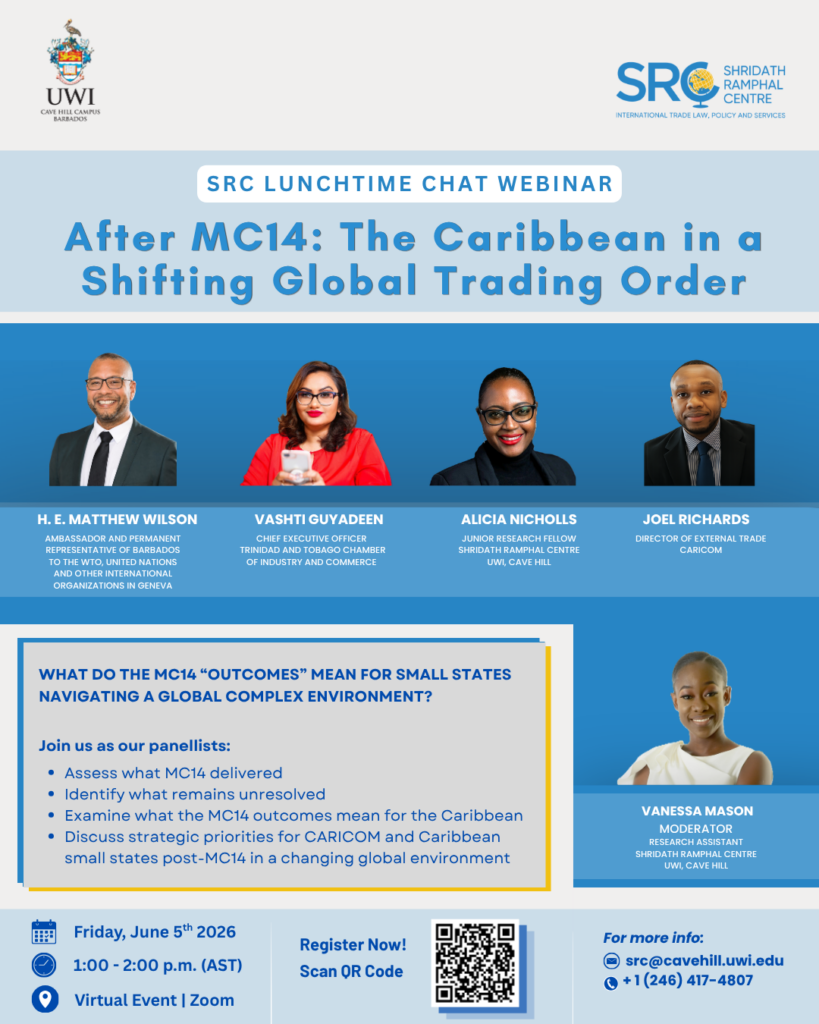
2026-06-05T13:00:00-0400@*1$*On Friday, June 5th, 2026, the Shridath Ramphal Centre will host a Lunchtime Chat via Zoom under the theme “After MC14: The Caribbean in a Shifting Global Trading Order”. The session will explore the outcomes of the World Trade Organization’s 14th Ministerial Conference, held in Yaoundé, Cameroon in March 2026. Panelists will examine what was actually achieved, what was left on the table, and what it all means for small states navigating an increasingly complex global trading system.
One Hand Can’t Clap: EU-Caribbean Relations, the Samoa Agreement and the Global Gateway
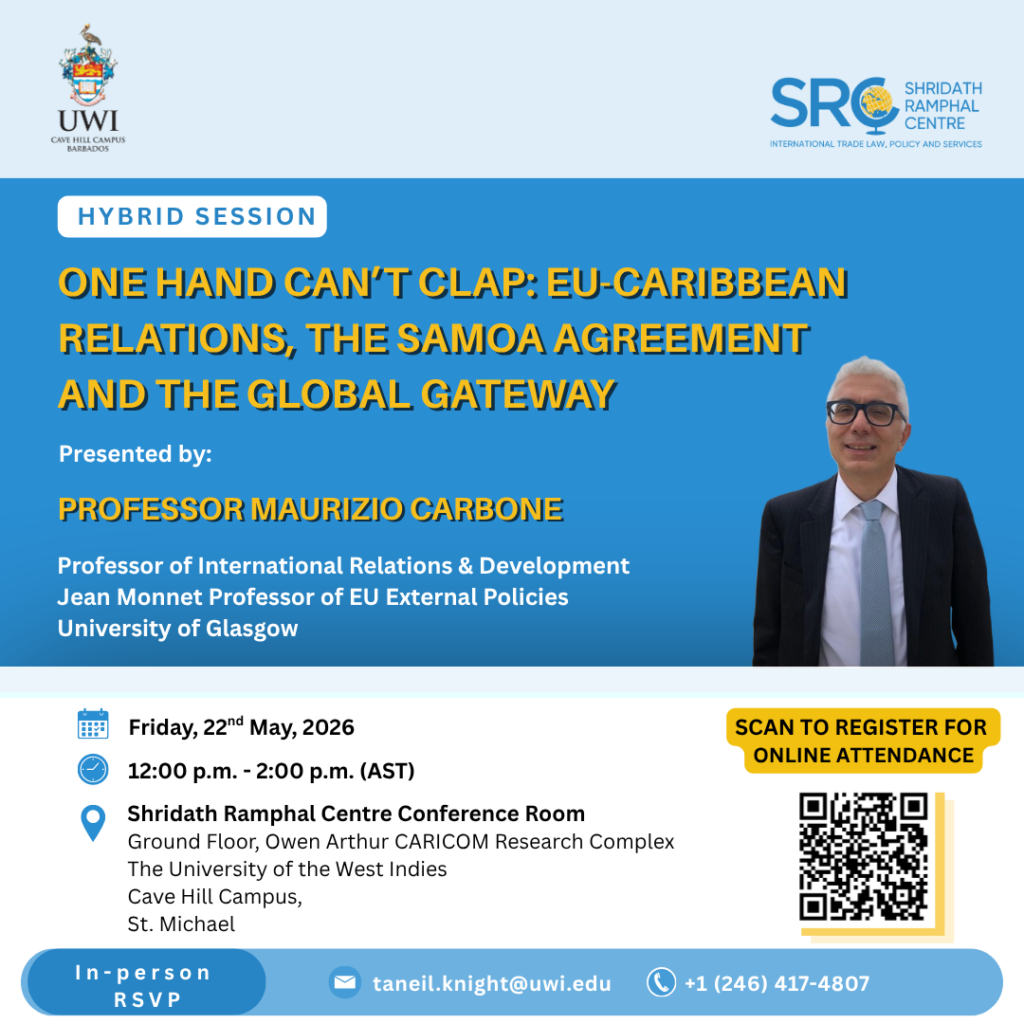
2026-05-22T12:00:00-0400@*2$*The Shridath Ramphal Centre will host a featured hybrid presentation by Professor Maurizio Carbone, Professor of International Relations & Development and Jean Monnet Professor of EU External Policies at the University of Glasgow, on Friday, May 22, 2026.
Panel 4 | The Caribbean Crucible: Geopolitics, Security, and External Powers in a Contested Basin | Old Empires, New Security Roles: Is the Caribbean Entering a New Era of Great-Power Competition?
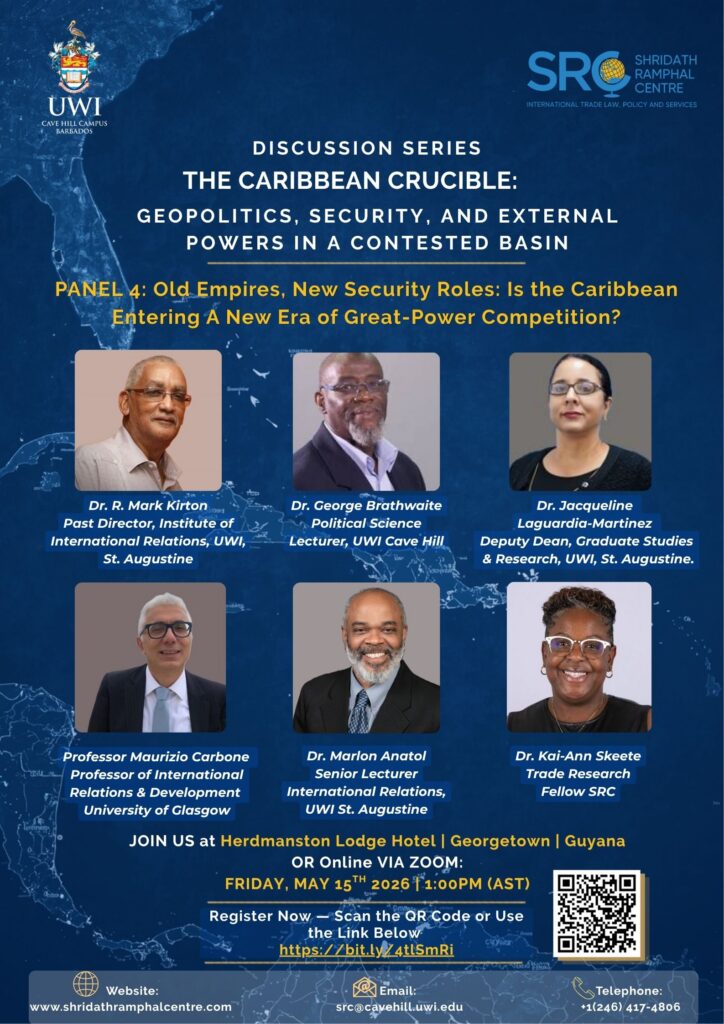
2026-05-15T13:00:00-0400@*2$*The SRC invites you to join us for Panel 4 of the four-part series, The Caribbean Crucible: Geopolitics, Security, and External Powers in a Contested Basin.
Panel 3 | The Caribbean Crucible: Geopolitics, Security, and External Powers in a Contested Basin | EEZs, Maritime Boundaries and Security Claims: From Partnership to Policing? Rethinking US–Caribbean Relations
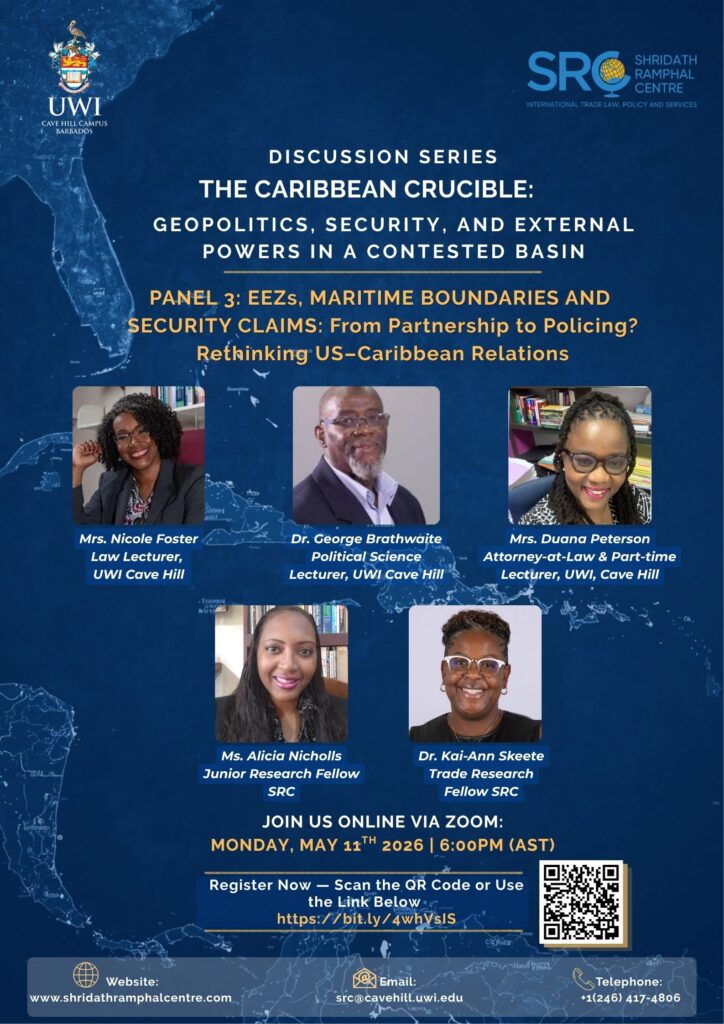
2026-05-11T18:00:00-0400@*2$*On Monday, May 11, 2026, the SRC hosted Panel 3 of the four-part series, The Caribbean Crucible. This panel explored whether US–Caribbean security engagement has come at the cost of Caribbean sovereignty, examining security within Caribbean maritime jurisdictions and whether the relationship has shifted from partnership to policing. The discussion was incisive, urgent, and deeply engaging.
Once Upon a Time: Diplomacy in the Image of Our Times
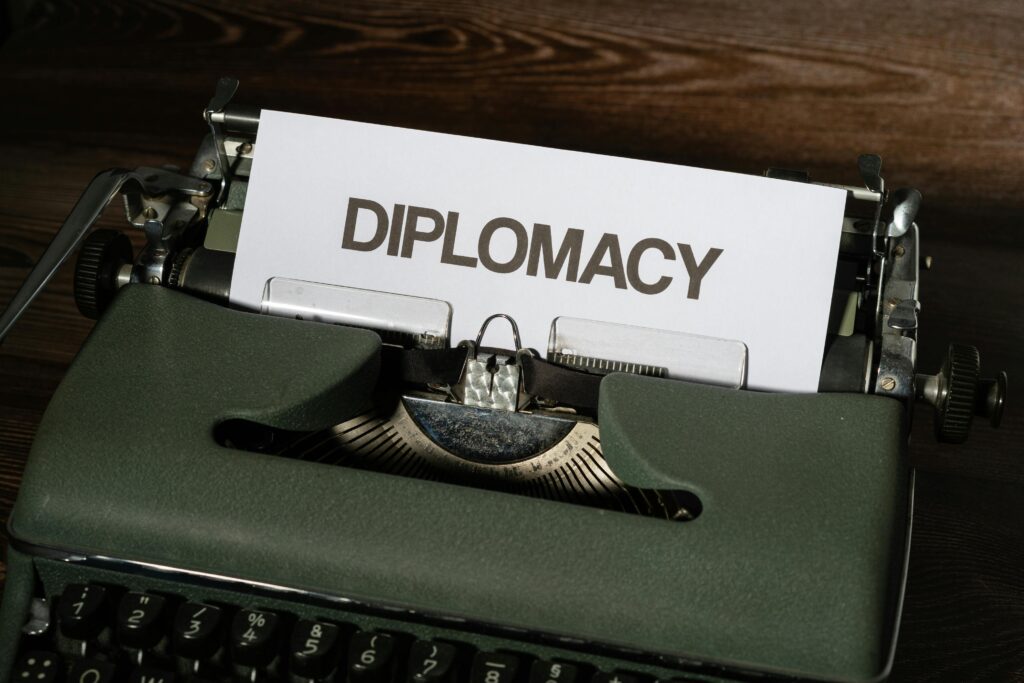
Vanessa Mason$* In watching recent regional and international events, I pondered whether political discourse, and diplomacy more specifically, is in decline or being remade in the image of the times. This is a question that I am certain concerns not only seasoned career diplomats but average citizens. To avoid any misunderstanding, I use ‘diplomacy’ here to mean specifically the conduct of international interactions and communications between states.