


SRC congratulates Senator Lisa R. Cummins on appointment as Barbados Minister of Tourism

The SRC extends congratulations to our Advisory Board Member, Senator Lisa R. Cummins, who was selected to be Barbados’ next Minister of Tourism and International Transport. Senator Cummins was appointed as the Board Chairperson of the Barbados Port Inc. by the administration of the Hon. Mia Amor Mottley, Prime Minister of Barbados, in 2018. Her promotion to the post of Minister of Tourism and International Transport was announced during Prime Minister Mottley’s cabinet reshuffle on Wednesday, 22 July. A former alumna of the SRC’s flagship Masters in International Trade Policy (MITP) programme, Senator Cummins has had a long and distinguished career in the fields of diplomacy, trade policy, trade negotiations and business development. She was for many years the Executive Director of the Barbados Coalition of Service Industries (BCSI) until becoming the present Executive Director of Lumin Consulting, a company of The University of the West Indies. The SRC wishes Senator Cummins well in her new position.
New UWI Partnership with EUI set to deepen ties
UWI Regional Headquarters, Jamaica. Tuesday, July 14, 2020 – A Memorandum of Understanding (MOU) signed between The University of the West Indies (The UWI) and the European University Institute (EUI) is expected to deepen ties between the Caribbean and Europe and help The UWI protect the Caribbean Community (CARICOM) in the European Union ( EU) . Signed virtually on July 14, 2020 by Prof. Sir Hilary Beckles, Vice-Chancellor of The UWI and Prof. Renaud Dehousse, President of the EUI, the agreement includes the establishment of a research centre, which will help to promote inter-regional and intra-regional development and encourage discourse on how transnational and global issues impact the Caribbean Region and Europe. The partnership foresees collaboration in areas of studies and research common to both institutions, with a view to focusing on sustainable development, multilateral trade, gender equality, security, environment and climate change, migration, energy, regional integration processes and transnational governance. Last year, Sir Hilary saw the economic and financial vulnerability of CARICOM as a consequence of Brexit and began to pursue a strategy to position The UWI in the EU as a strategic response. Noting that the region needs greater policy support within the EU, in light of the EU downgrade of the region’s finance sector, and poor responses of regional entrepreneurs to the Economic Partnership Agreement (EPA), he noted that The UWI had to step up to create an academic research and business advisory hub in the EU. After a year of negotiations the EUI agreed to host a joint UWI-EU centre. “It will be anchored in Florence, Italy and will provide services to our foreign service community, business groups, advocacy leaders in issues such as public health, climate change, economics equity for small island nations”, Sir Hilary explained. Referring to the relationship between Europe and the Caribbean over 500 years as “one of the most intense historical experiences between two parts of the world and the basis of modernity as we know it”, Sir Hilary said “It is a relationship that has to be sustained within the context of its positive contributions, mutually to Europe and to the Caribbean and of course to the wider world. So, it is perfectly normal therefore that universities ought to be coming together within this context to sustain the benefits and to provide a vision for the future of this relationship.” Pointing to the Sustainable Development Goals (SDGs), defined by the United Nations, he said that “they have certainly created a context within which universities are asked to become activists in the pursuit of these very laudable goals that are intended to move our cultures and our civilizations ahead within the finest values of humanity, transcending issues of trade and also focussing interest on culture and broadly speaking, development.” Noting that joint activities by universities are very significant in effective achievement of the SDGs, Sir Hilary said that The UWI, for example, has been selected by the International Association of Universities to provide global advocacy around some of these sustainable goals, in particular, goal #13 which focuses on climate smart issues. “As we seek therefore to bring our activism in line with our teaching, our research, our advocacy, and the creation of partnerships that will enable all of us to make a greater contribution to the world and to humanity, this context is very, very significant. So we are honoured and it is a tremendous pleasure for us to begin this partnership agreement with the EUI. We are of one mind, we have a common vision. Against the background of a heritage of over 500 years, it is logical therefore that we should be a activist on many areas of trade, of cultural exchange and of course within the context of the sustainable development goals”, Sir Hilary declared. Prof. Dehousse said that given The UWI’s excellent reputation, “the partnership with them is a kind of bridgehead in the broader Caribbean and Latin American world and represents an opening towards a region of the world in which we are still developing contacts.” He noted that the EUI was created in 1972 with an academic definition “to be a producer of research in the social sciences and humanities and to train a new generation of scholars who would then practice in the various member countries of what was then the EEC”. However, with the expansion of their role in the EU it has become essential for “the opening up of this institution to the rest of the world because Europe’s problems today are no longer confined to what is going on within its borders witnessed of course via the recent pandemic, but the list is long of issues which are acute issues in Europe but also represent challenges which other parts of the world are confronted with.” Prof. Dehousse explained that, “In that context it is absolutely indispensible for us to open up towards other regions of the world, open up to other kinds of actors who are not necessarily like ourselves, where institutions of higher education and research may be interested in the knowledge that is generated by those institutions.” He expanded, “we think it is indispensible for us to develop activities, research training and outreach with partners in the various regions of the world and as it happens we are fully aware that we do have a lot in common on which we can build. We share a similar interest for regional integration and the comparison of regional integration experiences, we share a similar interest in transnational governance. We have a certain tendency to think of ourselves as not only as regional actors but as regional actors with a global outreach so with all that heritage in common it would be a shame if we were not able to develop joint activities of different types all of which are listed in the agreement we have signed.” Work has begun on the implementation of the MOU at both The UWI and the EUI. The SRC, through its Deputy Director, will be instrumental in advancing
SRC concludes roundtable webinar on leveraging the diaspora for Post COVID-19 trade and recovery – RECORDING HERE!

On Wednesday, July 15, 2020, the Shridath Ramphal Centre for International Trade Law, Policy & Services of The University of the West Indies, Cave Hill, Barbados hosted its latest SRC Lunch Time Chat – a roundtable discussion on ‘Leveraging the Caribbean Diaspora for Post COVID-19 Trade and Recovery’. The webinar, which was held via Zoom teleconference, attracted participants from across the Caribbean and the world, and included academics, civil servants, policy makers, development professionals and students. Leading the discussion was an expert panel of Caribbean-born, diaspora-based professionals whose rich backgrounds spanned the areas of trade, finance, diplomacy, export promotion, development and management consulting. They were Mr. David Gomez (Director of The Ramphal Institute of the Commonwealth, UK), Mrs. Paula Hippolyte-Bauwens (Consultant on EU / Development cooperation affairs, Brussels, Belgium, EU), Mr. Kevin Howell (CEO Anchor Group NA Corp, USA) and Mr. Dav-Ernan Kowlessar (Executive Director of Dykon Developments, Trinidad & Tobago and Canada). The session was moderated by Miss Alicia Nicholls, Trade Researcher with the SRC. During the hour and a half long session, the panelists gave their insights on how the Caribbean diaspora has been faring and responding to the COVID-19 pandemic in their adopted homes. The panelists also offered their perspectives on how the diaspora could assist, and is assisting, their home countries in their recovery efforts. The panelists all agreed that the diaspora had much more to offer than simply monetary support, but also brought considerable networks, knowledge, mentoring and know-how. Finally, they also proposed several concrete ways in which Caribbean governments could better engage and leverage the diaspora as they seek to rebuild their economies, attract FDI and stimulate exports. Among the proposals the panelists raised were defining clearly who is the diaspora, getting to know the diaspora better, expanding the types of investment vehicles available for the diaspora to invest in, improving the ease of doing business and access to information on any export restrictions, and providing incentives for diaspora investment. The panelists also praised the Barbados Government’s latest initiative to allow persons to work remotely from Barbados. The SRC extends its appreciation to the expert panelists, and to the audience members who attended and shared their questions and perspectives via the Chat. The recording from the session is available below. See this and past SRC Lunch Time chats and events on our SRC Video Gallery.
Caribbean Hospitality Professionals to benefit from training through WIRSPA /WSET Partnership
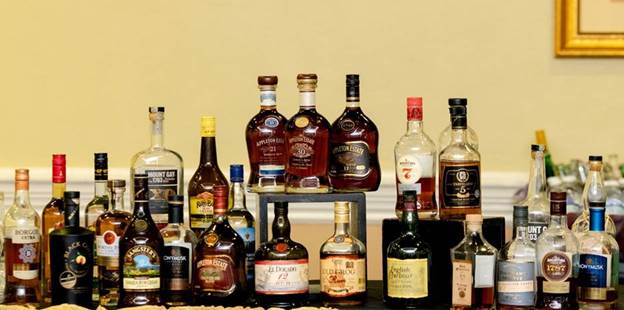
Bridgetown Barbados, 10 July 2020: Mixologists, bartenders and other hospitality professionals in the Caribbean, who have been adversely affected by the COVID-19 pandemic will be the beneficiaries of a partnership between the West Indies Rum & Spirits Producers’ Association (WIRSPA) and the Wine & Spirit Education Trust (WSET). WIRSPA, which represents distillers’ associations across the Caribbean and WSET, the largest global provider of wine, spirits and sake qualifications have come together to offer at least 200 Level 1 Awards in Spirits courses online. This course will give Caribbean hospitality professionals the opportunity to increase their industry knowledge and skills free of cost while they are unable to work. Beverage alcohol and other hospitality professionals over the age of 18 will be eligible for the course with individual distillers’ associations selecting the most deserving candidates in their market. The Level 1 Award in Spirits course, run online via WSET’s Online Classroom, will start on July 27th and will run for four weeks. At the end of the course students will take a remotely invigilated online exam, and those who are successful will receive a certificate and WSET lapel pin. WIRSPA’s membership of Caribbean-based distilleries will provide additional support during the course, running tasting sessions and webinars on their brands and products as a supplement to WSET course material. Deniece Bourne, WSET Business Development Manager – Americas East & The Caribbean, comments, “Tourism is a major industry across the Caribbean, and, in these challenging times, we are committed to offering our support to displaced hospitality professionals. We are delighted to partner with WIRSPA for this initiative which aims to empower participants through education and a qualification that will help them in their careers, both practically and professionally, once they are able to return to work.” Komal Samaroo, WIRSPA Chairman said, “WSET is an internationally recognized provider of education, and this initiative is making available to our hospitality professionals, a world class qualification in spirits. This certification will provide them with important new skills and enhance their employment prospects.” According to Vaughn Renwick, CEO of WIRSPA, “beverage service professionals – mixologists, bartenders, bar managers and other hospitality industry professionals – have been on the sharp edge of the lockdown, with many giving up all income as the industry was shut down and only now slowly opening. This is our way of supporting this important sector and providing individuals with additional skills, in anticipation of full re-employment.” Caribbean-based organizations interested in contributing to this initiative may contact Deniece Bourne, Business Development Manager – Americas East & The Caribbean of WSET Americas at dbourne@wsetglobal.com or Vaughn Renwick, CEO of WIRSPA at vaughn.renwick@wirspa.com for more information.
UWI Tradelab Projects and Showcase

This year, for the second time, the Cave Hill Campus’ SRC and Faculty of Law teamed up to facilitate the offering of another TradeLab clinic as part of a global network of Universities offering the experience to students and beneficiaries. Learn more about The UWI Tradelab here. Dr. Ronnie Yearwood (Law Lecturer) and Dr. Jan Yves Remy (SRC) have been offering the course to third year law students and MITP students in which they supervise teams of three to four students who during this course of a semester work on a trade or investment law project for a beneficiary client in the region. This year the students worked on three exciting topics for Caribbean clients namely: Tangible and concrete proposals for improving small State participation the context of the reform of the WTO s Dispute Settlement System The Application of the ATA Carnet as a potential tool to promote Caribbean exports to Brazil A Proposal for a Comprehensive Economic and Trade Agreement between CARICOM And China Please click on the links above to access the full reports on the Tradelab website. They are also available on the SRC’s website Tradelab page here. The UWI students showcased their projects at the annual TradeLab meeting on Friday 10 July. For more information on TradeLab and applications please contact Dr. Yearwood or Dr. Remy. Learn more about the UWI Tradelab by visiting our page.
CARICHAM Elects New Executive at AGM
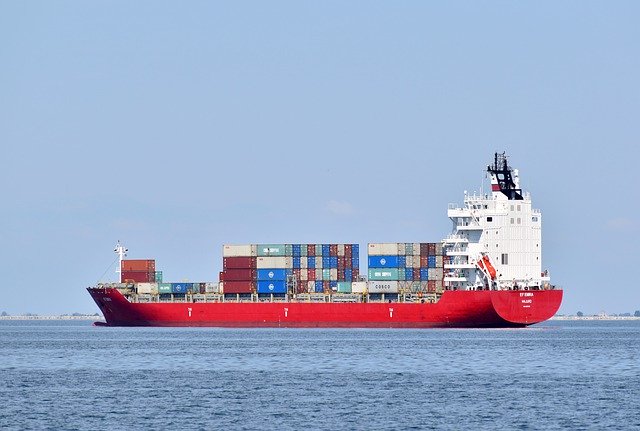
Basseterre; St. Kitts. June 30, 2020 – CARICHAM, the Network of Caribbean Chambers of Commerce, elected Dr. Thackwray “Dax” Driver, President & Chief Executive Officer (CEO) of the Trinidad & Tobago Energy Chamber as its new Chairperson and Mr. Andrew Satney, Executive Director (ED) of the St Kitts & Nevis Chamber of Commerce as its new Vice-Chair at its first Annual General Meeting (AGM) held on June 29th, 2020. They succeed Ms. Lizra Fabien, ED of the Dominica Association of Industry & Commerce and Mr. Trevor Fearon, former CEO of the Jamaica Chamber of Commerce who functioned as Chair and Vice-Chair during the Network’s first year of operations. Representing over 90,000 businesses, the Network, which was launched in Barbados in April 2019, comprises 21 Chambers of Commerce in 14 CARICOM member states as well as in the British Virgin Islands, Cuba, the Dominican Republic, Guadeloupe, Martinique and Sint Maarten. Dr. Driver, the incoming Chairperson, told participants in the virtual AGM of the Network, that over his tenure in office he would continue the thrust to ensure that CARICHAM adds value to the Chambers’ member firms, the vast majority of which are MSMEs and which have been negatively impacted by COVID-19, even as we prepare to mitigate the potential impact of the 2020 hurricane season. Outgoing Chairperson, Lizra Fabien highlighted some of the major achievements of CARICHAM during the first year since it’s Launch. The Networks expanded by 5 Chambers to 21, to include The Bahamas, the British Virgin Islands, Dominican Republic, Guadeloupe and Sint Maarten. This growth of the Network saw an expansion of opportunities, resources, and expertise to advance core objectives of the Chambers, to include Advocacy and enhanced Membership Value. Additionally, CARICHAM: built and strengthened partnerships with key regional and international partners such as the United Nations Office of Disaster Risk Reduction (UNDRR), the Organisation if Africa, Caribbean and the Pacific States (OACPS), the CARICOM Secretariat and its various bodies such as the CARICOM Disaster Emergency Management Agency (CDEMA), Caribbean Export Development Agency (CEDA), and the other Networks of Chambers globally; represented the interest of its Membership and the wider Private Sector regionally and internationally; hosted the CARICHAM BRICS+ Conference as a means of understanding the opportunities for doing business between CARICHAM countries as well as with Brazil, Russia, India, China and South Africa; and established the CARICHAM Regional Growth Series as a platform to share best practices among Chambers, Members and Partners. The Network also re-committed to its objectives and 4-pillar work programme, comprising: Disaster Risk Reduction/Mitigation; Trade (Promotion/Facilitation and Transportation); Membership Value and Advocacy; and Knowledge/Best Practices Sharing.
SRC hosts Webinar on Leveraging the Caribbean Diaspora for Post COVID-19 Trade and Recovery
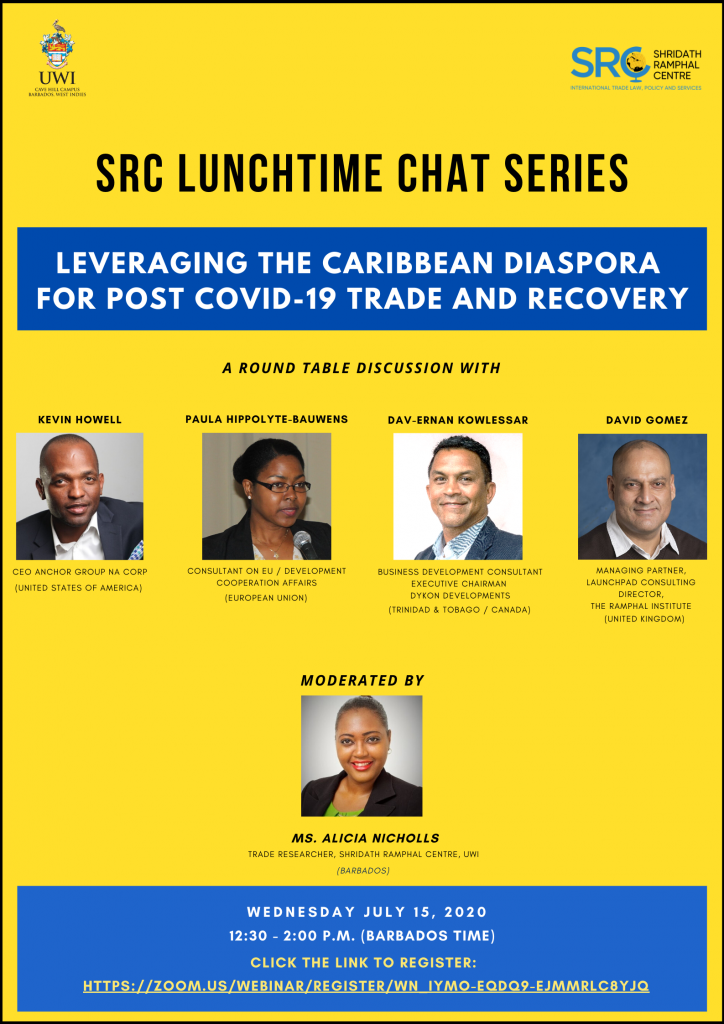
On July 15, 2020, the Shridath Ramphal Centre for International Trade Law, Policy & Services of The University of the West Indies, Cave Hill, Barbados hosted its latest SRC Lunch Time Chat. This time the topic of discussion was ‘Leveraging the Caribbean Diaspora for Post COVID-19 Trade and Recovery’ and was held online via Zoom teleconference. Leading the discussion was a roundtable of Caribbean-born, diaspora-based trade and development professionals. They were Mr. David Gomez (Director of The Ramphal Institute of the Commonwealth, UK), Mrs. Paula Hippolyte-Bauwens (Consultant on EU / Development cooperation affairs, Brussels, Belgium, EU), Mr. Kevin Howell (CEO Anchor Group NA Corp, USA) and Mr. Dav-Ernan Kowlessar (Executive Director of Dykon Developments, Trinidad & Tobago and Canada). The session was moderated by Miss Alicia Nicholls, Trade Researcher with the SRC. During the hour and a half long session, the panelists gave their insights on how the Caribbean diaspora has been faring and responding to the COVID-19 pandemic in their adopted homes. The panelists also offered their perspectives on how the diaspora could assist, and are assisting, their home countries in their recovery efforts. Finally, they also proposed several concrete ways in which Caribbean governments and the private sector could better engage and leverage the diaspora. The panelists all agreed that the diaspora had much more to offer than simply monetary support, but also brought considerable networks, knowledge, mentoring and know-how. Among the proposals the panelists raised were expanding the types of investment vehicles available for the diaspora to invest in, improve the ease of doing business and access to information on any export restrictions, provide incentives for diaspora investment and making use of trade policy courses. The panelists also praised the Barbados Government’s latest initiative to allow persons to work remotely from Barbados. The SRC extends its appreciation to the expert panelists and to the audience members who attended and shared their questions and perspectives via the Chat.
Caribbean Rum Producers To Benefit From Maintained Brexit Tariffs
Bridgetown, Barbados – 3 July 2020: Despite changes coming as a result of Brexit, Caribbean Rum will continue to be protected from unfair competition from subsidised cheap rum entering the UK market from other countries. Following the UK’s exit from the European Union on 31 December 2020, the existing tariffs will remain and Caribbean Rum Producers will continue to benefit from a joint effort agreement negotiated by the industry and Caribbean governments to ensure this vital measure, in the form of a tariff on low-priced products, remains in place. In late May, the UK published its new Global Tariff containing the list of import duties that will be implemented once the UK leaves the EU and takes control of its own trade regime at the end of 2020. Following a concerted effort by the region’s rum industry, CARICOM and CARIFORUM governments, the UK has maintained the ‘Residual Tariff’ on rum. Komal Samaroo, Chairman of WIRSPA and the Guyana conglomerate Demerara Distillers explained “This vital, protective measure put in place by Europe some two decades ago, followed intense lobbying by WIRSPA producers, in collaboration with our counterparts in the French departments of Martinique and Guadeloupe. Its maintenance goes some way to levelling the playing field for our producers.” He added, “we wish to extend our sincere gratitude both to our Caribbean governments and to the UK for this very positive result.” According to WIRSPA, the protective tariff was put in place to protect Caribbean rum producers from low-priced products originating from countries, which provide extensive subsidies to their local sugar and rum producers. Prior to the establishment of the tariff, studies had indicated that over 85% of the world production of alcohol was subsidised in one way or another. Clement Lawrence, head of the Jamaica Rum Industry and Chairman of Wray & Nephew said, “The tariff continues to afford Jamaica producers of branded and specialised, bulk high ester rum, valuable protection in the market. This has played no small role in supporting the growth of Jamaican rum in overseas markets and its absence would lead to a decrease in the region’s share of the EU market.” According to Vaughn Renwick, WIRSPA CEO, while this is a very positive outcome for the industry, the road ahead is still uncertain, “we do hope the UK and EU are able to agree to a trade arrangement that allows our products to move through Europe without additional red tape and costs. Going forward, we also will continue to work with governments to ensure that this arrangement remains, and that limited protections are not traded away in future negotiations”. ABOUT WIRSPA The West Indies Rum & Spirits Producers Association (WIRSPA) is one of the oldest, private sector trade associations in the Caribbean. It represents rum producers in Antigua & Barbuda, Barbados, Belize, Haiti, Dominica, Dominican Republic, Grenada, Guyana, Jamaica, St. Vincent & the Grenadines, St. Lucia, Suriname and Trinidad & Tobago. Visit www.wirspa.com; www.acr-rum.com Tel: (246) 228-8033 Email: wirspa@wirspa.com
ENROLL Now for our MITP, PGITP or Individual Courses!

The SRC is now accepting applications for our one-year Masters in International Trade Policy, our four-month Post-Graduate Diploma in International Trade Policy and our individual trade policy courses. Please see our courses page for further details on the courses and programmes we offer and how to apply.
SRC Staff participate in AfronomicsLaw Webinar on Vulnerability and Trade
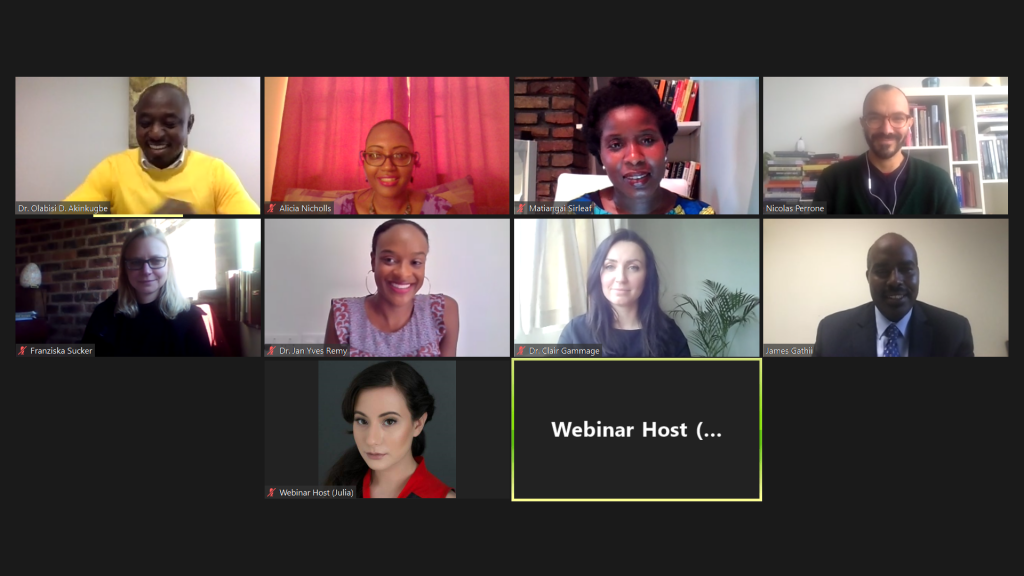
On June 22, 2020, SRC Deputy Director, Dr. Jan Yves Remy and trade researcher, Alicia Nicholls, participated in the AfronomicsLaw Webinar II Series entitled ‘Vulnerability in Trade and Investment Regimes in the Age of COVID-19‘. Dr. Remy and Ms. Nicholls provided a Caribbean perspective on the issue of vulnerability in a trade and investment context. Particularly, they spoke about the SRC’s research project, with the help of a noted regional economist, to create a Trade Vulnerability Index (TVI). The TVI is being proposed as an alternative for determining eligibility for special and differential treatment in a World Trade Organization (WTO) context. The SRC’s working paper on the TVI may be accessed here. The panel was expertly moderated by Dr. Olabisi Akinkugbe, Assistant Professor in the Schulich School of Law of Dalhousie University, California, USA. The four other distinguished panelists were: Ms. Matiangai Sirleaf, Associate Professor of Law, University Pittsburgh School of Law, USA Dr. Franziska Sucker, Associate Professor, Oliver Schreiner School of Law, University of the Witwatersrand, Johannesburg, South Africa Dr. Clair Gammage, Senior Lecturer in Law, University of Bristol, UK Dr. Nicolás Perrone, Research Associate Professor of International Law, Universidad Andrés Bello, Chile The SRC sincerely thanks AfronomicsLaw for the opportunity to participate in this important discussion. The video recording from the event may be watched here.