


Addressing Genetically Modified Foods: A Rising Food Security Concern for the Region

Camille Russell$*Genetically Modified Organisms (GMOs) are one of the most controversial areas of science. While their use in certain fields like medicine is accepted, when it comes to their use in food and agriculture, ethical and moral questions loom. For example, while GM insulin is acceptable in the medical field, there remains skepticism over genetically modified soy and corn crops.
GM foods refer to any foods containing or derived from a genetically-engineered organism. The World Health Organization (WHO) defines GMOs as “organisms (i.e. plants, animals or microorganisms) in which the genetic material (DNA) has been altered in a way that does not occur…
CCJ Upholds COTED’s Decision on Cement Classification

Port of Spain, Trinidad. The Caribbean Court of Justice (‘CCJ’) today delivered a judgment which upholds the classification decision of the CARICOM Council for Trade and Economic Development (‘COTED’) on cement, known as Rock Hard Cement, imported and/or distributed within CARICOM by Rock Hard Distribution Limited, Mootilal Ramhit and Sons Contracting Limited and Rock Hard Cement Limited. These proceedings in the CCJ’s Original Jurisdiction mark the finale of complex litigation which has resulted in five separate judgments and numerous orders thus far. Today’s judgment settled the dispute as to whether Rock Hard Cement ought to be classified as ‘Building cement (grey)’ and be charged a CARICOM tax of 15% when imported into the region, or as ‘Other hydraulic cement’ in which case a levy of 0-5% would be payable. Earlier this year, COTED decided that Rock Hard Cement was to be classified as ‘Other hydraulic cement’ in line with the advice received from the World Customs Organization’s (‘WCO’) Harmonized System (‘HS’) Committee. The State of Trinidad and Tobago, Trinidad Cement Limited (‘TCL’) and Arawak Cement Company Limited argued that COTED’s decision-making process was procedurally flawed and that COTED’s reliance on the WCO’s advice went against the economic objectives of the CARICOM tax. On this basis they contended that Rock Hard Cement should be classified as ‘Building cement (grey)’ and be subjected to the 15% tax as Rock Hard Cement was in direct competition with TCL’s regionally produced ‘Building cement (grey)’. In its judgment, the CCJ upheld the COTED classification decision as being binding on all Member States in keeping with Article 29(1) of the Revised Treaty of Chaguaramas (RTC). The Court found that COTED was fully entitled to place heavy reliance upon the WCO advice, given the role of the WCO in harmonizing rules on international trade within the context of the World Trade Organization. While it upheld the COTED classification decision, the Court also commented that recent developments in the cement industry made it appropriate for a study to be done by COTED to assess whether the tariff rate for imported ‘Other hydraulic cement’ ought to be increased to give additional protection to regional cement manufacturers so that regional cement manufacturers might obtain an appropriate level of protection. The Court indicated that the conduct of such a study would be entirely in keeping with the CARICOM Treaty obligation on COTED to keep the tariff under review (Article 83 (5) of the RTC). The CCJ also recommended greater collaboration in undertaking global trade commitments, as for example, in their commitments to the World Trade Organization, and it suggested the implementation of a project aimed at harmonizing the classification of goods based on WCO standards in a move to increase CARICOM trade. This judgment was delivered for the consolidated matters of Trinidad Cement Limited and The State of Trinidad and Tobago and Rock Hard Distribution Limited and Mootilal Ramhit and Sons Contracting Limited (TTOJ2018/001), Trinidad Cement Limited & Arawak Cement Company Limited and The State of Barbados and Rock Hard Cement Limited (TTOJ2018/002), Rock Hard Cement Limited and The State of Barbados and The Caribbean Community (BBOJ2018/001) and Rock Hard Distribution Limited and The State of Trinidad and Tobago and The Caribbean Community(SLUOJ2018/001). END
Preparing Brexit: No Deal

New analysis from the Institute for Government, a leading UK-based think tank, discusses what newly appointed UK Prime Minister Boris Johnson will need to do in his first 100 days to prepare for no deal, and what he will have to do after October 31 if the UK leaves the EU without a deal. The report was authored by Joe Owen Maddy Thimont Jack Jill Rutter. The report may be accessed here. Please feel free to discuss in the comments section below what implications you think a no deal Brexit may have, especially for the rollover agreement CARIFORUM signed with the UK.
CARIFORUM Embarks on critical Human Trafficking study
(CARICOM Secretariat, Turkeyen, Greater Georgetown, Guyana) Efforts to address the issue of Human Trafficking in the CARIFORUM Region are being bolstered with a new study on Human Trafficking that is expected to provide a greater understanding of the problem within and across its borders. Canadian firm, Dunn, Pierre, Barnett and Company, Canada Limited, has been engaged by CARIFORUM to conduct the comprehensive study. The countries involved include Antigua and Barbuda, The Bahamas, Barbados, Belize, Dominica, Dominican Republic Grenada, Guyana, Haiti, Jamaica, Montserrat, Saint Lucia, St Kitts and Nevis, St Vincent and the Grenadines, Suriname and Trinidad and Tobago. The study began on July 19, 2019 and will inform the methods that will be used to design interventions which are evidence-based and consistent with best practices in anti-trafficking including, but not limited to prevention, protection and prosecution. It is hoped that the research will also provide useful information on, types, patterns and routes of trafficking; profiles of trafficked persons, and vulnerability factors for trafficking; border and law enforcement issues and information about the traffickers; and anti-trafficking efforts currently being undertaken. It will also examine anti-trafficking efforts of international organisations and civil society within the region. The research team is expected to meet with critical stakeholders including representatives of Ministries of National Security, Legal and Attorneys General, the Police, prisons and other public sector agencies. Individuals from vulnerable communities, victims and proprietors will also form part of the study. The private sector and civil society organisations will also be participating in this important regional initiative. The Cooperation of all stakeholders is anticipated. The team, which comprises ten (10) consultants will be led by Dr. Ninna Nyberg Sørensen from the Danish Institute of International Studies, Dr. Victoria Knox from the Department of Force Migration and Refugees Studies, University of London and Dr. Justine C. Pierre, Migration and Labour Market Consultant, Dunn, Pierre, Barnett and Company. Other consultants include Dr. Ezra Mathias and Ms. Veronica Canac. Project consultants will engage with stakeholders and social actors in each CARIFORUM Member State and contact points from line Ministries in the Member States as well as representatives from regional and international institutions. According to the latest United Nations Office on Drugs and Crime (UNODC) Report (2018) Human Trafficking is on the rise in the CARIFORUM region. Therefore, this study is being conducted at a critical time. Human Trafficking is defined as the subjection of men, women and children to compelled service for the purposes of exploitation. The CARIFORUM study is being conducted with funding from the Caribbean Regional Indicative Programme under the Tenth European Development Fund (10th EDF).
Food Security – Our Concern
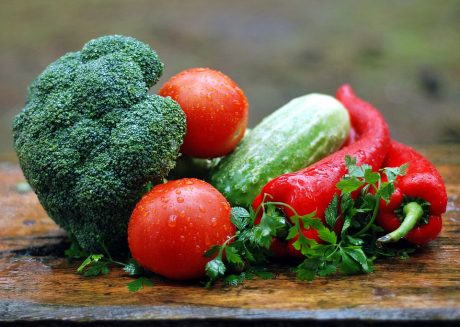
By: Neil C.A. Paul We in the Caribbean are faced with increasing food bills and escalating costs of food in the context of highly volatile prices. The food security situation is alarming when one considers that the food import bill in the region is upwards of five billion US dollars. In the recent past, rising food prices globally sparked off a series of debates among academics, farmers, the private sector, government officials and politicians. The debates attempted to apportion blame for the food price hikes to various quarters including the bio fuel industry primarily where food such as corn and other grains are used in the production of ethanol. The rising cost of oil had also been included in the equation of the rising prices, as it should. Although the price of oil has dropped from record levels in recent times, the price volatility remains and as such is still relevant. There are other causes as well which includes increased demand as a result of improved standards of living in some developing countries particularly, China and India, severe weather conditions such as droughts and floods, wars and other human conflict and so on. But how did we get here in this disturbing situation? Well, Caribbean countries, since the 1980s, adopted the paradigm of buying then cheap food from the world market and in effect “put the sword” to the domestic agricultural sector which could not compete favourably. The result of that strategy is unsustainable food import bills. These countries have also been locked in export-led commodity production such as bananas, sugar, rice, cocoa and coffee. The problem with that approach is that the Caribbean countries continue to be trapped in the import – export paradigm of the 1970s and 1980s and are still revisiting the productivity issues and the policies of export-led agricultural development to deal with food security. As a result of the high food prices and the high fuel costs, it may well be that producing food for the domestic market is now a viable consideration and may even be economically feasible. However, there are concerns that as a result of the neglect of the domestic agricultural sector, many of the valuable indigenous institutions such as the marketing boards and farmers’ cooperatives are now relegated to the past. In fact, there are also concerns that production skills are also on the decline as many farmers left the agricultural sector to work in the tourism sector, with the neglect of the domestic agricultural sector in many Caribbean countries. It is for these reasons why the causes of the current situation must be properly analyzed and understood. This opportunity to rethink concepts such as self-reliance, self-sufficiency and food sovereignty must be put to good use. It is important to consider these concepts in any strategy being developed ensure the security and sovereignty of food resources in this part of the global landscape, particularly as it relates to the current food Import Bill. Another important consideration, also highlighted by the South Centre, is that… “developing countries must also use the opportunity to consider features of the global landscape which have caused countries to place greater importance on the production of food over export crops, and imports over local production, and which have affected national ownership and control over main resources for food production”. In this regard economic theory such as economies of scale and comparative advantage have been advanced by the north and those institutions charged with the responsibility for “development” to encourage the importation of then cheap food on the world market and in effect caused a disregard for food sovereignty. Economists are always quick to point out that vulnerabilities of the agricultural sector in this part of the world renders the agricultural sector unviable and unattractive and as such continue to recommend buying food on the world market as a more viable alternative. The late Lloyd Best, noted Caribbean Economist, although not referring to the current food situation, made the observation that it was not in the Caribbean interest to necessarily adopt the economic theories of developed countries without question. Dean Husbands , another economist and a former public servant of Trinidad and Tobago, noted,“It may not be prudent to place our economic faith entirely and exclusively in one economic philosophy based on the developed country experience for economic prescriptions and solutions”. The notion that economic theory should always guide our decisions for development must be observed with some exception. The case for food security and food sovereignty are such exceptions. Neil C.A. Paul is the Director of the Shridath Ramphal Centre. This post was originally posted on Linkedin. To see the original post and discussion, please visit here.
Is Food Security the Problem?
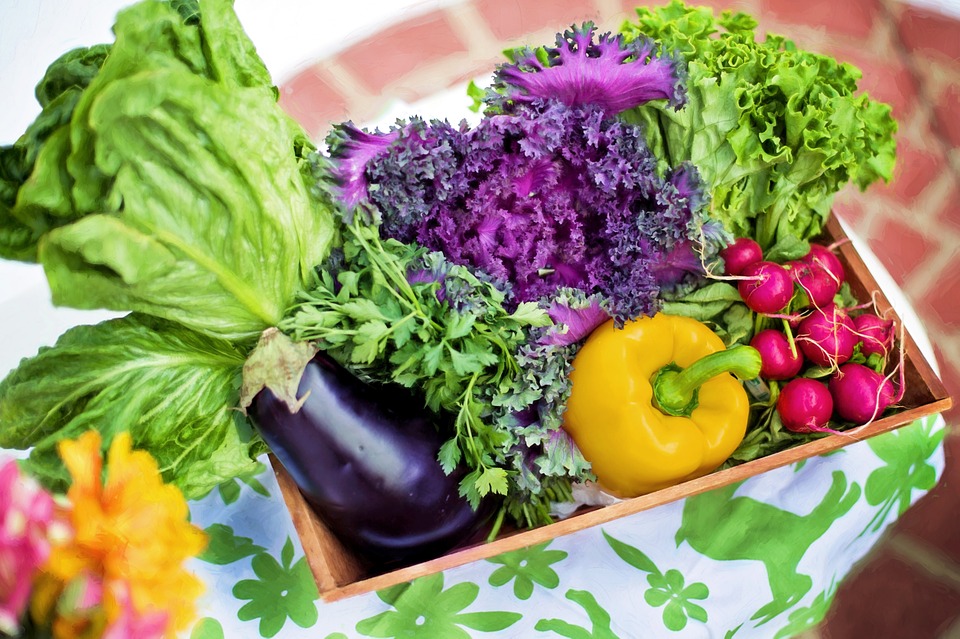
By Neil C.A. Paul As I grapple with the Food Security Situation, I am a little concerned…Is Food Security the problem or a result of a bigger problem? I am concerned because we must identify clearly what is the problem if we are to devise workable solutions. I am told by some colleagues that the problem is a lack of productivity. Others surmise that the problem stems from a negative view, impression, perspective of agriculture as a profession…business… career. Still some view the problem from a policy perspective where commission agents are allowed to import cheap food at the detriment of the agricultural sector and then there is the perspective that we must import the food that tourists want to eat. I think the last comment is hogwash. When we travel abroad, we don’t seek out our cultural foods so why should the tourist insist on their cultural food. Let me have some of your thoughts as I try to crystallise the real problem. Neil C.A. Paul is the Director of the Shridath Ramphal Centre. This post was originally posted on Linkedin. To see the original Linkedin post and discussion, please click here.
CARICOM a strong partner for UN – Political Chief
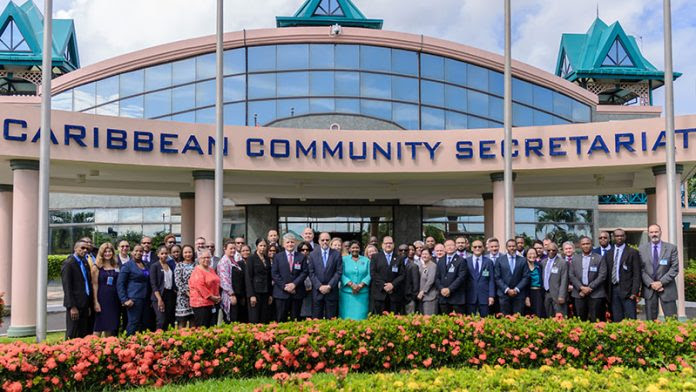
Photo Caption: A family photo of the 10th General Meeting of the Caribbean Community and the United Nations System, on Tuesday 23 July 2019, at the CARICOM Secretariat Headquarters in Georgetown, Guyana. (CARICOM Secretariat, Turkeyen, Greater Georgetown, Guyana) United Nations (UN), Assistant Secretary-General for Political Affairs, Mr. Miroslav Jenča on Tuesday 23 July 2019 lauded the multi-faceted cooperation between the UN and the Caribbean Community (CARICOM), noting “we can all be proud of the great achievements that it has yielded.” Mr Jenča highlighted the multi-agency UN-CARICOM cooperation in the “laudable initiative” to adopt and implement a Counter-Terrorism Strategy. This is but one of many examples of how the collaboration has become “ever more operational and successful,” he said. The UN political chief was at the time addressing the Tenth General Meeting of CARICOM and the United Nations System which is reviewing the progress of cooperation between the two organisations, at the CARICOM Secretariat Headquarters in Georgetown, Guyana. He drew attention to the impressive attendance at the meeting by his UN colleagues as an illustration of how CARICOM-UN cooperation, and the enthusiasm for it, is growing exponentially. “Seeing so many UN colleagues attending this meeting today clearly illustrates the importance that CARICOM has as a strong partner for us,” Mr Jenča said. CARICOM’s importance to the UN has been underscored recently, he added, by the UN Secretary-General’s attendance at the 40th Meeting of the Conference of CARICOM Heads of Government in Saint Lucia, earlier this month. During that conference which he also had the pleasure to attend, the UN Political Chief said it became clear once more how many priorities CARICOM and the UN shared, chief among which is the fight against climate change. CARICOM Secretary-General, Ambassador Irwin LaRocque in his remarks said that cooperation between the Caribbean Community and the UN System spawned the areas of economic and sustainable development on the meeting’s agenda. They include debt sustainability, financing for development, crime and security, Small Island Developing States (SIDS) and the 2030 Development Agenda, youth and human resource development, food security, agriculture and fisheries, and health touching non-communicable diseases and HIV/AIDS. For the first time, since these reviews began, he said, the issue of human mobility brought about by the increasing flows of migrants into CARICOM Member States, was on the meeting’s agenda in addition to post-disaster displacement. “The challenges and economic constraints that impede the sustainable development of Small Island Developing States were well recognized by Secretary-General Guterres, at the 40thRegular Meeting of Heads of Government in Saint Lucia earlier this month. He expressed his determination to “[bring] more resources and [to strengthen] UN support to SIDS” and called on this Tenth General Meeting to “review the cooperation between our organizations, explore areas where the reform effort…can deliver greater dividends, and where [the UN and CARICOM] can expand our fruitful cooperation,” the Secretary-General told the meeting. With much appreciation for the strong support of the UN Secretary-General, and in the face of these increasing challenges, Secretary-General LaRocque said CARICOM Member States remain firm in their resolve for the sustainable development of the Caribbean region. “We are agents of that resolve as we seek to build on the strong foundation of partnership established between CARICOM and the UN System to effect improved development results. It is a partnership that the Member States of CARICOM rely on, one that has become more effective in our coordination and implementation, one that will continue to evolve in response to changing needs and priorities, and one that on this tenth anniversary we can be proud of,” the Secretary-General stated. Projecting for the future, Ambassador LaRocque said: “It is my hope also that it will be one of action for the accelerated implementation of climate objectives, the Sustainable Development Goals (SDGs), and the commitments made in the Addis Ababa Action Agenda. Moreover, it is my earnest wish that the new decade would become one of innovation in addressing the specific challenges and vulnerabilities of Small Island Developing States.” He added, “I look forward to this Tenth General Meeting as a spring-board for the convergence that we seek in addressing global sustainable development issues and as a testament to the longevity of our partnership and our commitment to leaving no one behind.”
Shridath Ramphal Centre preparing the Region to compete Globally
Source: Barbados Advocate – Friday, July 19, 2019 edition page 15
Apply now for our MITP and PGITP programmes!
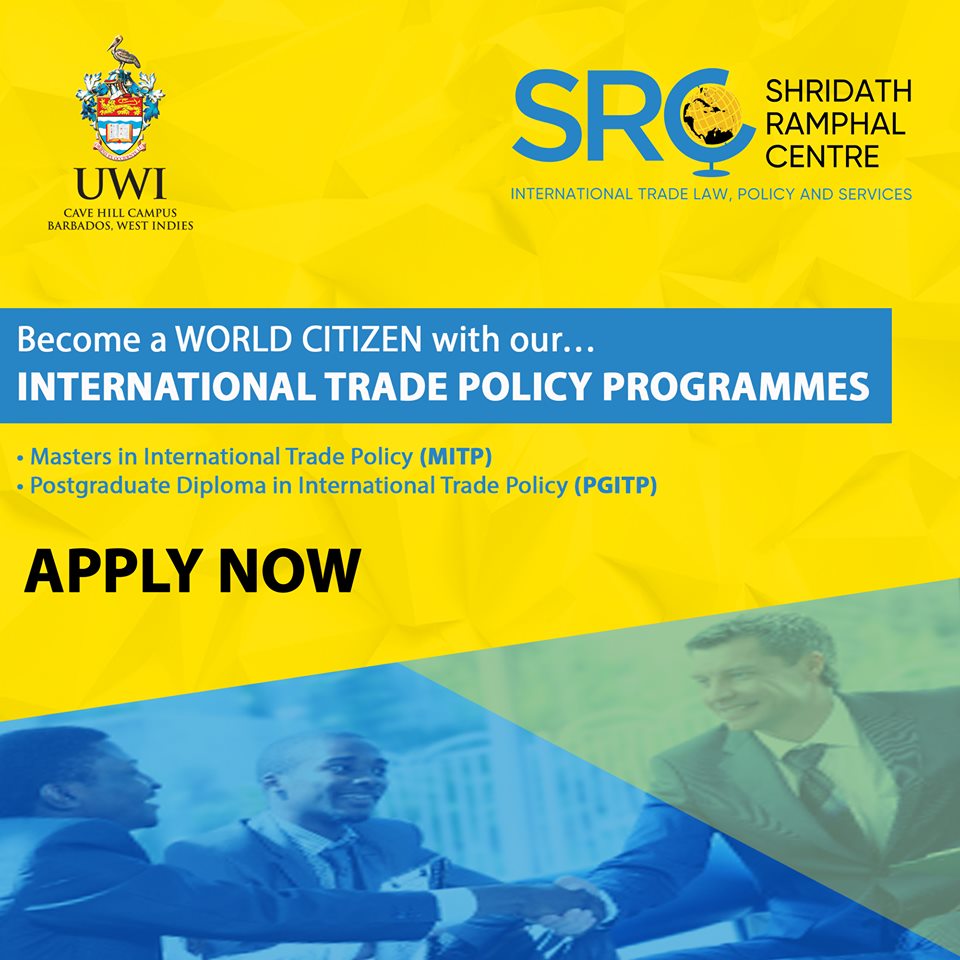
Apply Now for the SRC’s International Trade Policy Programmes & Courses:-Masters in International Trade Policy (MITP)-Postgraduate Diploma in International Trade Policy (PGITP)-Individual Courses (ad-hoc basis) Learn the art of the (trade) deal and how to navigate complex trading and business relationships the Caribbean is involved in with the Masters and Postgraduate Diploma in International Trade Policy, offered by the Shridath Ramphal Centre, at The UWI, Cave Hill. Every year, participants of this programme go on a Study Tour to Geneva, Switzerland where they meet Caribbean and international trade experts, and visit the major international trade institutions where trade is taking place. At the end of the course, SRC will assist in finding participants internships in regional and international trade organizations. For more information visit: https://shridathramphalcentre.com/course/course-page-src/
Grenada PM Lauds Joint UWI – Regional Rum Industry Initiative
(WIRSPA Secretariat, Bridgetown, Barbados) – Prime Minister of Grenada, Dr. The Right Hon. Keith Mitchell has lauded the signing of a Memorandum of Understanding between the University of the West Indies Open Campus and the regional rum industry grouping – the West Indies Rum & Spirits Producers Association (WIRSPA). Speaking last week during the signing of the MOU in Grenada, the Prime Minister said the initiative, which will see as its first task the development of an online training initiative for the industry, was a great example of the university applying itself to the needs of the productive sector, one in which the Caribbean possessed a wealth of expertise and heritage. The MOU was signed during a reception to welcome members of the industry to Grenada for WIRSPA’s annual technical meeting, which was held from 9-11th July 2019. The meeting saw over 35 persons from many of the grouping’s large and small distilleries discussing key issues including responsible drinking, production and quality standards, product labelling, environmental management and raw material supplies. The Prime Minister also commended recent efforts on the part of the industry to intensify its support for tackling problem drinking and in particular, the recent announcement to upgrade product labelling in domestic CARICOM markets and its self-regulation code. Commenting on the signature of the MOU, Professor Julie Meeks Gardner, Acting Principal of the UWI Open Campus, said “The UWI Open Campus is delighted to forge an alliance with The West Indies Rum and Spirits Producers’ Association that is mutually beneficial to both regional entities. As part of the leading University in the Caribbean, the UWI Open Campus is well placed to contribute to building the knowledge base in the rum and spirits industry, which has been a vital component of the region’s cultural and economic landscape for centuries.” According to Chairman of WIRSPA and head of the Guyana conglomerate, Demerara Distillers, Komal Samaroo “the MOU will provide a framework for cooperation between the regional rum industry and the University of the West Indies. Our first planned collaboration is expected to be an online certification offering in rum and spirits production which would be offered to our members and more widely internationally, in several languages.” He added, “this is a unique offering in education and training, coming as it does from the home of rum, the Caribbean.” Chairman of Grenada Distillers, Leroy Neckles, speaking on behalf of the local rum industry welcomed the grouping to Grenada, “we in Grenada are proud to host our first meeting of regional rum producers. Grenada has a tremendous rum and sugarcane heritage which is second to none. We hope to share this unique history with our colleagues from the rest of the Caribbean”. About WIRSPA The West Indies Rum & Spirits Producers Association (WIRSPA) is one of the oldest private sector trade associations in the Caribbean. It represents rum producers in Antigua & Barbuda, Barbados, Belize, Haiti, Dominica, Dominican Republic, Grenada, Guyana, Jamaica, St. Vincent & the Grenadines, St. Lucia, Suriname and Trinidad & Tobago. Authentic Caribbean Rums, the products produced by the membership of WIRSPA, represent a unique and distinct sector within the drinks industry, supported by common quality standards and rules. The Authentic Caribbean Rum (ACR) Marque was developed as a symbol of authenticity, provenance and quality for rums within the WIRSPA family. For more, visit www.wirspa.com; www.acr-rum.com T: (246) 228-8033 E: wirspa@wirspa.com About The UWI For the past 70 years The University of the West Indies (The UWI) has provided service and leadership to the Caribbean region and wider world. The UWI has evolved from a university college of London in Jamaica with 33 medical students in 1948 to an internationally respected, regional university with near 50,000 students and four campuses: Mona in Jamaica, St. Augustine in Trinidad and Tobago, Cave Hill in Barbados, and an Open Campus. As part of its robust globalization agenda, The UWI has established partnering centres with universities in North America, Asia, and Africa such as the State University of New York (SUNY)-UWI Center for Leadership and Sustainable Development, the UWI-China Institute of Information Technology, the University of Lagos (UNILAG)-UWI Institute of African and Diaspora Studies and the Institute for Global African Affairs with the University of Johannesburg (UJ). The UWI offers over 800 certificate, diploma, undergraduate and postgraduate degree options in Food & Agriculture, Engineering, Humanities & Education, Law, Medical Sciences, Science & Technology, Social Sciences and Sport. As the region’s premier research academy, The UWI’s foremost objective is driving the growth and development of the regional economy. Times Higher Education has ranked The UWI among the top 1,258 universities in world for 2019, and the 40 best universities in its Latin America Rankings for 2018 and was the only Caribbean-based University to make the prestigious lists. For more, visit www.uwi.edu. The correct name of the university is The University of the West Indies (inclusive of “The”).