


Shridath Ramphal Centre Rebrands and Hosts Open Day
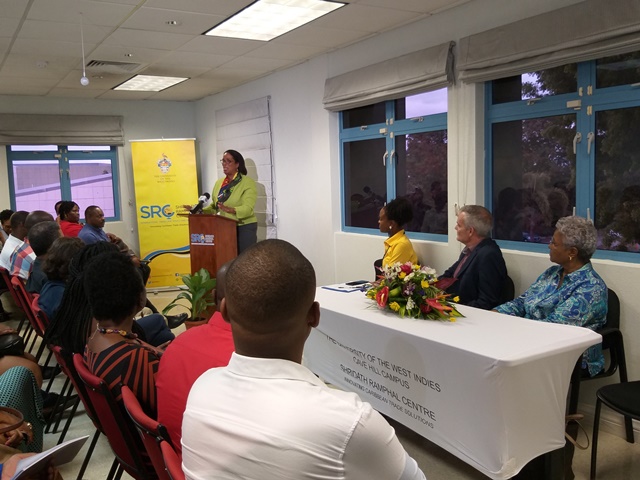
A new logo, new website and an introduction to an exciting array of new training, research and outreach activities were outlined to invited guests as the Shridath Ramphal Centre for International Trade Law, Policy & Services (SRC) of The University of the West Indies, Cave Hill held its Open Day on Friday, July 12, 2019. The highlight was an unveiling ceremony attended by government officials, members of the diplomatic corps, MITP alumni and members of the general public. The Open Day was broadcast live via Zoom. In his Welcome Remarks, SRC Director Neil Paul showcased the work of the Centre, highlighting the extensive rebranding exercise it has undergone over the past year. Currently in its fifteen cohort, the Centre’s flagship Masters in International Trade Policy (MITP) has been revamped to remain contemporary and relevant, taking into account the outcomes of an evaluation exercise conducted on MITP alumni. Introducing the new four-month Postgraduate Diploma in International Trade Policy (PGITP), Director Paul explained that it will also allow students unable to pursue a full Masters course of study to take the core courses in trade policy. The Centre is also collaborating with other departments on campus to launch other postgraduate diplomas, including an online postgraduate diploma on competition policy and a joint degree in trade and integration studies. Noting that it was an interesting time for global trade, Dean of the Faculty of Social Sciences, Dr. Justin Robinson, stated that the region can no longer take for granted that rich countries will support liberalism and multilateralism. In this vein, he said that it was essential that the SRC continue to prepare students with the mental agility to adjust to a rapidly changing global environment. Sharing similar sentiments, Acting Principal of The UWI Cave Hill, Professor Clive Landis, lauded the direction of the SRC, stating that it is in line with The UWI’s renewed emphasis on international visibility. SRC Deputy Director Dr. Remy treated audience members to a run-through of the new SRC website available at www.shridathramphalcentre.com, which is organized according to the three main pillars of the SRC – training, research and outreach. She invited persons to visit the website, follow the SRC on social media and encouraged alumni to join the newly formed MITP Alumni Network. Alumnus of Cohort 14 of the MITP Programme, Kelal Moore, said the MITP was a great experience, noting that the lecturers and SRC staff were helpful and that the programme lived up to what was advertised. An alumna of the MITP, Minister in the Ministry of Foreign Trade of Barbados, the Honourable Sandra Husbands, M.P. expressed her pleasure at having been among the first MITP cohorts. Calling the MITP programme one of the most satisfying and fulfilling courses of education that she had pursued, she noted the confidence it instilled when engaging in negotiations at the World Trade Organization. She explained that the Ministry of Foreign Affairs and Foreign Trade was dealing with a variety of issues in a number of trade arenas at the moment and that there were opportunities for collaboration with the SRC. The Ceremony concluded with an unveiling of the new SRC logo on the doors of the MITP office by Minister Sandra Husbands, SRC Director Paul, Deputy Director Remy, and Administrative Assistant, Ms. Clauzel Forde.
Why didn’t the chicken cross the water?

Camille Russell$*Throughout CARICOM, chicken is considered king. In fact, the region boasts close to 100 per cent sufficiency in eggs and approximately 67 per cent sufficiency for poultry meats. Furthermore, not only is the poultry industry the region’s largest industrial enterprise, with a gross income in excess of US$660 million, but it accounts for more than 80 per cent of the meat consumed in the region.
Yet, amidst these claims of high…
SKN Vibes: Shridath Ramphal Centre rebrands and hosts Open Day
By: SKN Vibes BRIDGETOWN, Barbados – July 15, 2019 – A new logo, new website and an introduction to an exciting array of new training, research and outreach activities were outlined to invited guests as the Shridath Ramphal Centre for International Trade Law, Policy & Services (SRC) of The University of the West Indies, Cave Hill held its Open Day on Friday, July 12, 2019. The highlight was an unveiling ceremony attended by government officials, members of the diplomatic corps, MITP alumni and members of the general public. The Open Day was broadcast live via Zoom. In his Welcome Remarks, SRC Director Neil Paul showcased the work of the Centre, highlighting the extensive rebranding exercise it has undergone over the past year. Currently in its fifteen cohort, the Centre’s flagship Masters in International Trade Policy (MITP) has been revamped to remain contemporary and relevant, taking into account the outcomes of an evaluation exercise conducted on MITP alumni. Introducing the new four-month Postgraduate Diploma in International Trade Policy (PGITP), Director Paul explained that it will also allow students unable to pursue a full Masters course of study to take the core courses in trade policy. The Centre is also collaborating with other departments on campus to launch other postgraduate diplomas, including an online postgraduate diploma on competition policy and a joint degree in trade and integration studies. Noting that it was an interesting time for global trade, Dean of the Faculty of Social Sciences, Dr. Justin Robinson, stated that the region can no longer take for granted that rich countries will support liberalism and multilateralism. In this vein, he said that it was essential that the SRC continue to prepare students with the mental agility to adjust to a rapidly changing global environment. Sharing similar sentiments, Acting Principal of The UWI Cave Hill, Professor Clive Landis, lauded the direction of the SRC, stating that it is in line with The UWI’s renewed emphasis on international visibility. SRC Deputy Director Dr. Remy treated audience members to a run-through of the new SRC website available at www.shridathramphalcentre.com, which is organized according to the three main pillars of the SRC – training, research and outreach. She invited persons to visit the website, follow the SRC on social media and encouraged alumni to join the newly formed MITP Alumni Network. Alumnus of Cohort 14 of the MITP Programme, Kelal Moore, said the MITP was a great experience, noting that the lecturers and SRC staff were helpful and that the programme lived up to what was advertised. An alumna of the MITP, Minister in the Ministry of Foreign Trade of Barbados, the Honourable Sandra Husbands, M.P. expressed her pleasure at having been among the first MITP cohorts. Calling the MITP programme one of the most satisfying and fulfilling courses of education that she had pursued, she noted the confidence it instilled when engaging in negotiations at the World Trade Organization. She explained that the Ministry of Foreign Affairs and Foreign Trade was dealing with a variety of issues in a number of trade arenas at the moment and that there were opportunities for collaboration with the SRC. The Ceremony concluded with an unveiling of the new SRC logo on the doors of the MITP office by Minister Sandra Husbands, SRC Director Paul, Deputy Director Remy, and Administrative Assistant, Ms. Clauzel Forde. This press release was published on SKN Vibes.
Barbados Today: New look Shridath Ramphal Centre
Published by Barbados Today A new logo, a new website and an introduction to an exciting array of new training, research and outreach activities were outlined to invited guests as the Shridath Ramphal Centre for International Trade Law, Policy & Services (SRC) of The University of the West Indies, Cave Hill held its Open Day on Monday, July 15, 2019. The highlight was an unveiling ceremony attended by Government officials, members of the diplomatic corps, Masters in International Trade Policy (MITP) alumni and members of the general public. The Open Day was broadcast live via Zoom. In his welcome remarks, SRC Director Neil Paul showcased the work of the centre, highlighting the extensive rebranding exercise it has undergone over the past year. Currently in its 15th cohort, the centre’s flagship MITP has been revamped to remain contemporary and relevant, taking into account the outcomes of an evaluation exercise conducted on MITP alumni. Introducing the new four-month Postgraduate Diploma in International Trade Policy (PGITP), Director Paul explained that it will also allow students unable to pursue a full Masters course of study to take the core courses in trade policy. The centre is also collaborating with other departments on campus to launch other postgraduate diplomas, including an online postgraduate diploma on competition policy and a joint degree in trade and integration studies. Noting that it was an interesting time for global trade, Dean of the Faculty of Social Sciences, Dr Justin Robinson, stated that the region can no longer take for granted that rich countries will support liberalism and multilateralism. In this vein, he said it was essential that the SRC continues to prepare students with the mental agility to adjust to a rapidly changing global environment. Sharing similar sentiments, Acting Principal of The UWI Cave Hill, Professor Clive Landis, lauded the direction of the SRC, stating that it is in line with the UWI’s renewed emphasis on international visibility. SRC Deputy Director Dr Jan Yves Remy treated audience members to a run-through of the new SRC website available at www. shridathramphalcentre.com, which is organized according to the three main pillars of the SRC – training, research and outreach. She invited people to visit the website, follow the SRC on social media and encouraged alumni to join the newly formed MITP Alumni Network. Alumnus of Cohort 14 of the MITP Programme, Kelal Moore, said the MITP was a great experience, noting that the lecturers and SRC staff were helpful and that the programme lived up to what was advertised. An alumna of the MITP, Minister in the Ministry of Foreign Trade of Barbados, Sandra Husbands expressed her pleasure at having been among the first MITP cohorts. Calling the MITP programme one of the most satisfying and fulfilling courses of education that she had pursued, she noted the confidence it instilled when engaging in negotiations at the World Trade Organization. She explained that the Ministry of Foreign Affairs and Foreign Trade was dealing with a variety of issues in several trade arenas at the moment and that there were opportunities for collaboration with the SRC. The ceremony concluded with the unveiling of the new SRC logo on the doors of the MITP office by Minister Husbands, SRC Director Paul, Deputy Director Remy, and Administrative Assistant, Clauzel Forde. (PR) This article was published in the Monday, July 15th edition of Barbados Today.
Looking into our history to find solutions to food security

By: Neil C.A. Paul As we continue to be confronted by the unsustainable food import bills around the Caribbean, there continues to be little effective interest in arresting the sliding food security situation. I say this because we see the struggling economies of the Caribbean and while the worst of the recent Financial Crisis seems to be behind us in the more advanced economies, it appears that we are still struggling in the Caribbean for the most part. In addition, we continue to hear and read of the challenges but there seems to be little implementation of the many strategies developed over the years. I have intimated elsewhere that perhaps part of the problem is linked to our adherence to economic theory developed in the advanced economies and is perhaps not suited to our circumstances. Allow me to suggest here, even for purposes of discussion, that just perhaps, we need to look backward into our history, not for nostalgia but more so, to identify strategies employed by our ancestors to survive the “hard times”. This is perhaps the key to developing theory for our development purposes. I refer here to the strategies of the “SOU SOU” or Meeting turn as it is referred to here in Barbados, the cooperative movement and Marketing Boards to allow for greater planning, sequencing and marketing of agricultural produce and ensuring that economies of scale are effected through the benefits of cooperation. The important concept of value chains is also very pertinent here. Another important antecedent is the practice known in some parts of the Caribbean like St. Lucia as the Koudmen, which is defined as a help, a free work day, a group work project. This concept is often seen in the aftermath of a disaster where communities or friends get together to repair a damaged dwelling without formal payment, except for food and drink. The point I am trying to make here is that there is certainly a few strategies used in the past but now, not so commonplace which we should revisit to assist us in our development imperatives. One of the least practiced imperatives of sustainable development is the consultation with relevant stakeholders and the development of home grown solutions. Often, well meaning technocrats implement strategies based on theory without the involvement of stakeholders’ buy-in and as such, chances of success are slim. We only have to look around and see how many projects have not met expectations. Quite recently I listened to a BBC programme on the success of a small village close to the Gobi desert in China (the largest desert in Asia and perhaps the world) in halting the spread of the desert and in fact greening of the area through planting of trees etc. The success was related to the efforts of one woman who eventually convinced her neighbours and the village through her individual efforts to create green spaces and actually develop agriculture in the area, and begin to reverse the adverse effects of climate change. The point is that success in such situations is related to meaningful consultation and example. The foregoing is a small teaser, if you will, to create some discussion and generate some ideas on how to begin to implement and solve our looming food security situation. Neil C.A. Paul is the Director of the SRC.
SRC chats with HOTT95.3 FM about upcoming Open Day
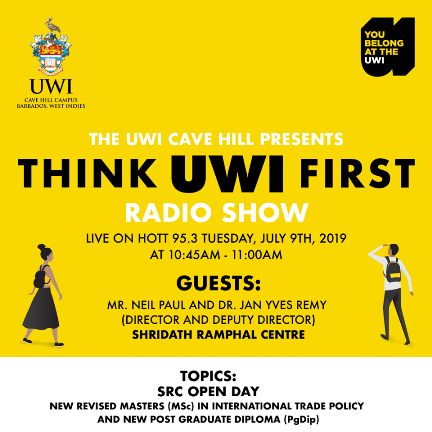
Director of the Shridath Ramphal Centre for International Trade Law, Policy & Services (SRC), Neil Paul, and Deputy Director of the SRC, Dr. Jan Yves Remy, chatted with DJ Big Red of Hott 95.3 FM about the SRC’s upcoming Open Day. The live interview took place on Tuesday, July 9, 2019 during the Think UWI First Radio Show which is broadcast on Hott 95.3 FM on Tuesdays. On Friday, July 12, 2019, the SRC will open its doors to the wider university population and the general public to showcase the Centre’s work and exciting new outreach activities and training programmes. The highlight of the Open Day will be a ceremony from 1-2pm where the new SRC logo and website, among other things, will be unveiled. Providing a background on the SRC, Director Paul noted that the Centre, which is based at The University of the West Indies Cave Hill, was the only trade policy institution in the region with a focus on both Caribbean and global trade policy issues. He explained that the SRC’s flagship programme, the Masters in International Trade Policy, just completed its fifteenth cohort. The highlight of the MITP programme is the Geneva Study Tour where students attend seminars and workshops at leading international trade and trade-related institutions, including the World Trade Organization (WTO). The SRC also offers ad hoc seminars, workshops and short courses, as well as a new column published in the local press called ‘Trading Thoughts’ which features thinking about contemporary trade issues and developments by regional trade scholars and practitioners. The SRC Director further highlighted the SRC’s cadre of young, well-trained staff, some of whom are MITP graduates, who are willing and able to provide sound technical advice to governments, the private sector and civil society. He stated that some of the Centre’s core research areas comprise trade and agriculture, health, the green economy, the blue economy and climate change. Speaking about the upcoming Open Day, Dr. Remy elaborated that the SRC had undergone an extensive rebranding exercise over the last few months. The MITP programme was revamped by introducing new or modified courses to better equip trade policy practitioners to navigate changing trade tides. The Deputy Director explained that for those who are unable to commit the time to the full twelve month Masters course, the newly introduced four-month Postgraduate Diploma in International Trade Policy (PGITP) provides a basic foundation of international trade policy principles. Dr. Remy noted that the MITP programme had a large and growing alumni which include current trade ministers and other top trade officials from across the region. She encouraged all former graduates to join the newly formed MITP Alumni Network which will also be formally introduced at the Open Day. Neil Paul, and Deputy Director of the SRC, Dr. Jan Yves Remy, chatted with DJ Big Red of Hott 95.3 FM about the SRC’s Upcoming Open Day. The live interview took place on Tuesday, July 9, 2019 during the Think UWI First Radio Show which is broadcast on Hott 95.3 FM each Tuesday from 10:45-11:00 am. On Friday, July 12, 2019, the SRC will open its doors to the wider university population and the general public to showcase the Centre’s work and exciting new outreach activities and training programmes. The highlight of the Open Day will be a ceremony from 1-2pm where the new SRC logo and website, among other things, will be unveiled. Providing a background on the SRC, Director Paul noted that the Centre, which is based at The University of the West Indies Cave Hill, was the only trade policy institution in the region with a focus on both Caribbean and global trade policy issues. He explained that the SRC’s flagship programme, the Masters in International Trade Policy, just completed its fifteenth cohort. The highlight of the MITP programme is the Geneva Study Tour where students attend seminars and workshops at leading international trade and trade-related institutions, including the World Trade Organization (WTO). The SRC also offers ad hoc seminars, workshops and short courses, as well as a new column published in the local press called ‘Trading Thoughts’ which features thinking about contemporary trade issues and developments by regional trade scholars and practitioners. The SRC Director further highlighted the SRC’s cadre of young, well-trained staff, some of whom are MITP graduates, who are willing and able to provide sound technical advice to governments, the private sector and civil society. He stated that some of the Centre’s core research areas comprise trade and agriculture, health, the green economy, the blue economy and climate change. Speaking about the upcoming Open Day, Dr. Remy elaborated that the SRC had undergone an extensive rebranding exercise over the last few months. The MITP programme was revamped by introducing new or modified courses to better equip trade policy practitioners to navigate changing trade tides. The Deputy Director explained that for those who are unable to commit the time to the full twelve month Masters course, the newly introduced four-month Postgraduate Diploma in International Trade Policy (PGITP) provides a basic foundation of international trade policy principles. Dr. Remy noted that the MITP programme had a large and growing alumni which include current trade ministers and other top trade officials from across the region. She encouraged all former graduates to join the newly formed MITP Alumni Network which will also be formally introduced at the Open Day.
SRC Open Day – July 12, 2019
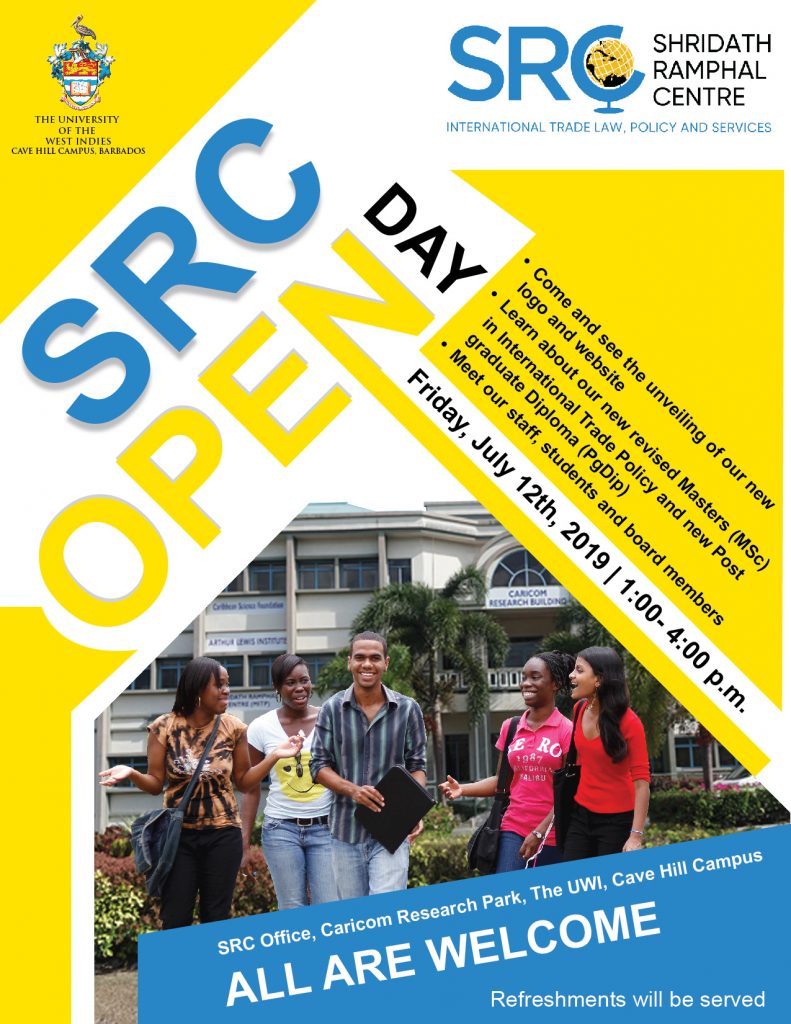
These are exciting times for the Shridath Ramphal Centre and we want you to share in them! The SRC will be having our Open Day on 12th July 2019 where we will showcase what we have done, and plan on doing, in the field of Caribbean trade policy. Please see our poster.
My experience in the MITP Geneva Study Tour
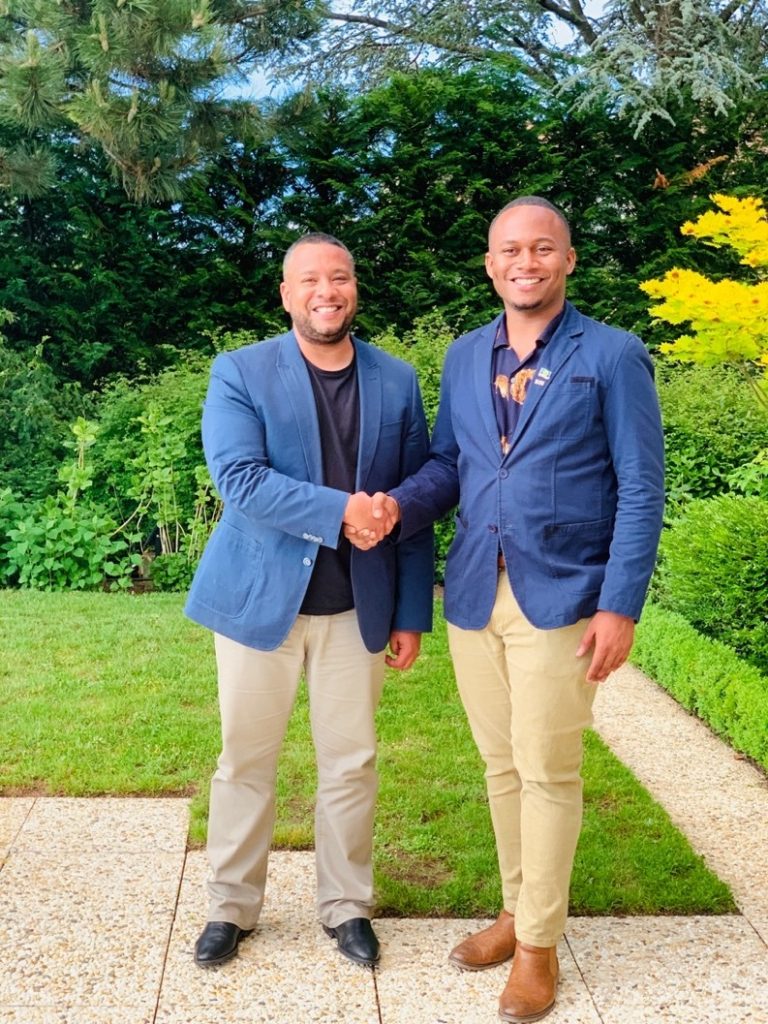
Ade O’NEAL$*Reform of the World Trade Organization (WTO), trade facilitation, and under-representation by Caribbean States at the WTO were some of the hot-button issues ventilated over the course of the two-week Study Tour in Geneva organized for students enrolled in the Masters in International Trade Policy (MITP) Programme at the Shridath Ramphal Centre for International Trade Law, Policy & Services (SRC) of The University of the West Indies. During the Study Tour, which is a key component of the MITP Programme, students engaged with academics, ambassadors and other diplomats, agency heads and fellow students to gain a greater appreciation for all t…
Geneva, still a place where trade people come together!
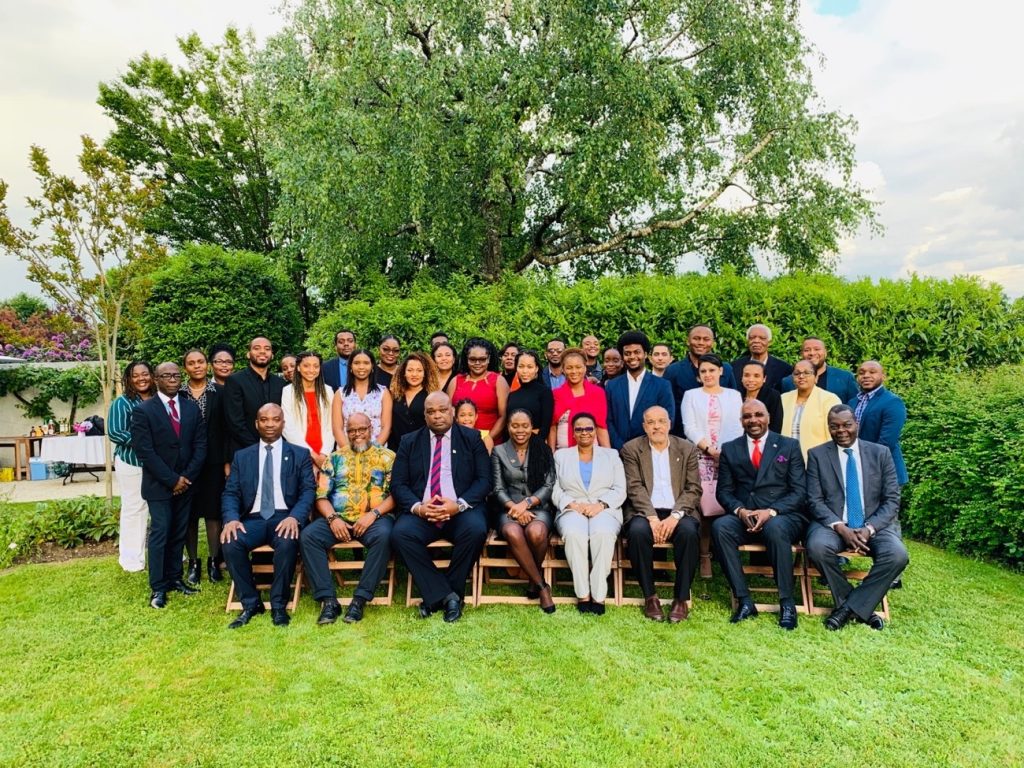
Dr. Jan Yves Remy$*As the plane climbs above Lake Geneva and I say goodbye again to the Swiss Alps, I reflect on my three-week stay in Geneva accompanying UWI/Cave Hill students enrolled in the SRC’s Masters in Trade Policy (MITP) programme. Geneva, a city in the heart of Europe, represents the best of humanity. It is a place where the world’s statesmen and women meet to pursue common values and promote peaceful relations among themselves, and is home to a number of multilateral organizations, like the United Nations, the World Trade Organization (WTO), the World Health Organization, to name a few.
Expanding China-Caribbean Trade
Alicia Nicholls$*Economic and political ties between the People’s Republic of China (China) and the Caribbean as a whole have undergone a substantial deepening in recent years. For both geostrategic and economic reasons, China has initiated much of this overture. But there are also compelling reasons why Caribbean countries increasingly regard China as a valued economic and financial partner, and why Caribbean firms are exhibiting a growing interest in China as a potential export market for their goods and services.